
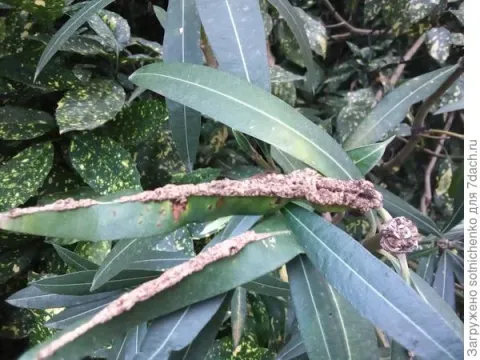
Oleander knot
Erwinia oleae
The causative agent of this disease is the bacterium Erwinia oleae, which belongs to the gram-negative phytopathogenic microorganisms. It is a highly specialized parasite that primarily affects the tissues of the common oleander.
What the section contains
Oleander knot
The infection enters the plant through various mechanical injuries to the bark, cracks, pruning cuts, or natural tissue openings. The bacteria actively multiply in the parenchyma and xylem, disrupting normal sap flow.
The microorganism can persist in infected plant debris, soil, and on gardening tools for an extended period. The pathogen spreads in garden conditions via rainwater splashes, irrigation water, and contaminated tools.
A biological feature of the pathogen is its ability to stimulate cell hyperplasia in the host, leading to the formation of specific growths. This tumor-inducing mechanism is exactly what gave the disease its name.
The bacterium's life cycle is closely linked to the plant's phenological stages, with peak activity observed during periods of intense sap movement and high air humidity.
The first and most noticeable sign of the disease is the appearance of characteristic tumor-like galls on the stems, branches, and leaves of the oleander. In the initial stage, they have a smooth surface and a light color, resembling small pads.
As the pathogen develops, the galls increase in size, their surface becomes bumpy and rough, and over time they darken to a brown or almost black color. Tissues inside the growths may become soft and start to rot.
When severely affected, the leaf blade yellows, curls, and falls off prematurely. There is significant deformation of young shoots, which stop growing and eventually wither away.
In the affected areas, bark cracking is often observed, from which a bacterial exudate in the form of a viscous liquid may leak. This sign is especially noticeable in the morning or after heavy precipitation.
- Appearance of bulbous growths on stems
- Darkening and hardening of the gall tissues
- Yellowing and shedding of leaves
- Stunting of overall plant growth
- Twisting of young shoots
The development of oleander knot is facilitated by high relative humidity, exceeding 70-80 percent, and frequent precipitation. Moisture is a necessary condition for the movement of bacteria across the plant surface.
The optimal temperature for active growth of the pathogen colonies ranges from +20 to +28 degrees Celsius. In conditions of moderate warmth and excessive humidity, the infection process accelerates significantly.
Any mechanical trauma sustained by the plant during pruning, maintenance, or as a result of pest activity is an important factor in its spread. Insects that damage the epidermis act as vectors for the infection.
Poor agricultural practices, such as excessive nitrogen fertilization, reduce the natural resistance of the oleander, making its tissues softer and more vulnerable to Erwinia oleae penetration.
Dense planting, which limits air circulation around the plant canopy, creates a microclimate ideal for the long-term survival of bacteria on the leaves and stems.
Oleander knot causes serious damage to the ornamental value of the plant, disfiguring its shape and disrupting the symmetry of the crown. Affected branches lose their ability to function properly.
The harm lies in the disruption of water and nutrient transport through the plant's vascular system. This leads to general exhaustion of the shrub, reduced flowering intensity, and loss of leaf color vibrancy.
In the absence of control measures, the pathogen can trigger a systemic infection throughout the entire plant. In neglected cases, the infection leads to the total death of individual branches or the entire specimen within one or two seasons.
The disease is extremely difficult to treat because the bacteria penetrate deep into the vascular system. Affected plants become a chronic source of infection for other oleanders in the collection or garden.
Economic damage is expressed in the need for complete replacement of planting material and the costs of quarantine and sanitary measures to stop the spread of the pathogen.
The main method of control remains strict sanitary hygiene: timely removal and destruction of all infected plant parts. Pruning tools must be disinfected with alcohol or a chlorhexidine solution after each use.
To prevent the spread of infection, it is recommended to perform preventive spraying with copper-based preparations, such as Bordeaux mixture, during the growing season, especially after heavy rains.
It is important to limit humidity in the root zone and avoid overhead watering of the canopy, preferring irrigation at the base. Regular canopy thinning allows for better ventilation and reduces the risk of infection.
When purchasing new specimens, quarantine is necessary by isolating plants from the healthy collection. If the first signs of the knot appear, it is best to completely remove and dispose of the plant by burning.
The use of biological fungicides or antibiotics approved for plant protection can only temporarily suppress the disease but does not guarantee a complete cure; therefore, the main emphasis is on prevention.