
Pectobacterium punjabense
Pectobacterium punjabense
Description
Symptoms
The primary symptom of infection is the appearance of water-soaked or oily lesions on plant tissues. As the infection progresses, these affected areas soften rapidly, often turning into a mushy consistency.
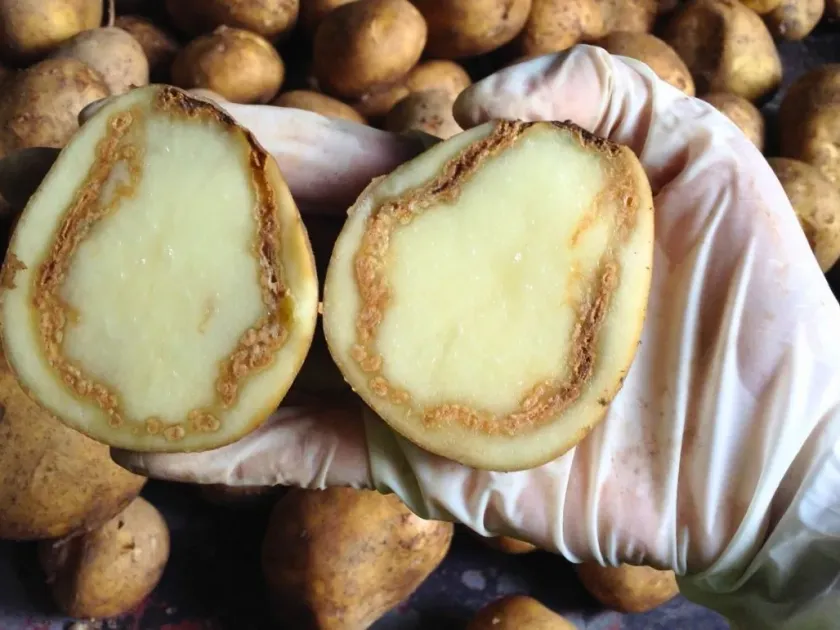
In potato tubers and root vegetables, the pathogen causes internal tissue decay. While the outer skin may appear relatively firm, the interior decomposes, often accompanied by a foul, pungent odor.
On stems, the disease manifests as dark, wet streaks that eventually girdle the shoot. This leads to a sudden loss of turgor pressure and the rapid wilting of the entire above-ground part of the plant.
Under high humidity, bacterial ooze can often be observed on the surface of lesions. This viscous liquid contains millions of bacterial cells capable of spreading the infection to neighboring plants.
Affected tissues often discolor to light brown or black due to secondary infection by saprophytic microorganisms. The tissue breakdown occurs extremely rapidly, especially when post-harvest storage conditions are compromised.
Pathogen
The causal agent is the Gram-negative, facultatively anaerobic rod-shaped bacterium Pectobacterium punjabense. This is a highly specialized phytopathogenic microorganism equipped with a potent enzymatic system.
The primary pathogenic mechanism involves the production of pectolytic enzymes. These enzymes degrade the middle lamellae of plant cell walls, leading to tissue disintegration and the formation of characteristic soft rot.
This pathogen is classified as an agent causing soft rot across a wide range of agricultural crops. Although closely related to other Pectobacterium species, it is genetically distinct and recognized as a separate entity.
The bacteria are capable of surviving for long periods in soil, on plant debris, and in surface water. They are easily transmitted through contaminated seed material and farming tools during routine agricultural activities.
A key characteristic of Pectobacterium punjabense is its high genomic plasticity, which allows it to rapidly adapt to various environmental conditions and effectively infect a diverse array of host plants.
Conditions for development
Optimal conditions for pathogen development include high relative humidity in both air and soil. Excessive moisture facilitates bacterial spread through rain splash and soil water films.
Temperature plays a decisive role in disease development. The pathogen is most aggressive at moderately high temperatures, ranging from 20 to 28 degrees Celsius, which significantly accelerates bacterial multiplication.
Micro-wounds, cracks, or damage caused by pests significantly facilitate the entry of the infection into host tissues. Any breach in the integrity of the plant surface provides an entry point for bacterial colonization.
Poor ventilation in storage facilities combined with high temperatures creates an ideal microclimate for soft rot outbreaks. Bacteria transition into an active phase, causing mass destruction of produce within just a few days.
Improper crop rotation and the use of infected planting material create a persistent reservoir for the pathogen. The accumulation of bacteria in the soil renders conditions extremely unfavorable for subsequent plantings.
Why it matters
The primary economic impact is the total loss of marketability of the produce. Affected tubers and vegetables lose their nutritional value and become unsuitable for sale, processing, or long-term storage.
In the field, Pectobacterium punjabense causes mass seedling damping-off and the collapse of adult plants. This results in significant reductions in crop density and substantial yield losses.
The rapid progression of the pathological process makes the localization of infection hotspots extremely difficult. A single infected plant can become the source of an epiphytotic outbreak for the entire field or storage facility.
Financial losses stem from the costs of culling contaminated produce, reduced market prices due to poor quality, and the necessity of safely disposing of infected crop residues.
A specific danger is the latent period of the infection. Seed material may appear visually healthy, but when planted under favorable conditions, the disease emerges, leading to soil contamination.
Protection
The primary control measure is the use of healthy, certified seed material. Strict phytosanitary control before placing crops into storage is mandatory.
Implementing a proper crop rotation system, which avoids planting susceptible hosts in the same soil for at least 3-4 years, helps to reduce the pathogen's baseline density in the field.
Protecting plants from mechanical damage and managing pests that serve as vectors for the infection is crucial during the vegetation period.
Post-harvest drying of produce and storage under strictly controlled temperature and humidity conditions are decisive factors in preventing the spread of rot.
- Disinfection of storage facilities and agricultural tools.
- Balanced mineral fertilization, avoiding excess nitrogen.
- Prompt culling and destruction of infected plant debris.
- Utilization of crop varieties with improved resistance to bacterial soft rot.
Discussion
No discussions yet — be the first.