
Paenibacillosis
Paenibacillaceae
The causative agents of the disease are bacteria from the Paenibacillus genus, belonging to the Paenibacillaceae family. These are Gram-positive, spore-forming rods known for their robustness in various environmental conditions.
What the section contains
Paenibacillosis
While some species are used in biotechnology as plant growth-promoting rhizobacteria, others act as opportunistic pathogens that exploit plant tissues when the host is stressed.
The pathogen utilizes secreted enzymes, such as proteases and cellulases, to break down plant cell walls, allowing the bacteria to penetrate and colonize the internal tissues.
The persistence of these bacteria is facilitated by their ability to form endospores, which can remain viable in soil and plant debris for several years without a host.
The interaction between Paenibacillus species and plants is complex, involving both direct tissue colonization and the modification of the rhizosphere environment to the detriment of the plant.
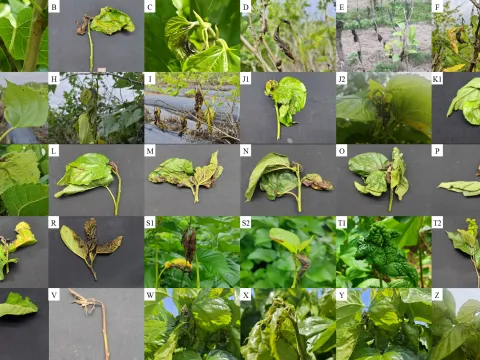
Initial symptoms often include seedling damping-off and stunted growth. The affected young plants exhibit yellowing cotyledons and a lack of vigor compared to healthy counterparts.
Roots of infected plants show signs of brown discoloration and necrosis. The fine root system may decay, becoming soft and mushy due to active bacterial degradation.
Stem lesions are common in more mature plants, appearing as dark, sunken spots. Under high humidity, these areas may develop soft rot with a noticeable foul odor.
Chlorosis of the leaves, starting from the lower foliage and progressing upwards, is a common indicator of impaired water and nutrient uptake through the damaged vascular system.
Advanced stages of the infection lead to permanent wilting, as the bacterial colonies obstruct the xylem, effectively preventing the movement of water throughout the plant.
Excessive soil moisture is the primary driver for disease development, as it facilitates the movement of motile bacteria toward the root zone and their subsequent colonization.
Temperatures ranging from 20°C to 30°C provide the optimal metabolic environment for rapid bacterial multiplication and enzyme production.
Poor soil drainage and low oxygen levels (soil compaction) promote anaerobic conditions, which are often exploited by Paenibacillus to outcompete beneficial microorganisms.
Mechanical damage to roots or stems, often caused by improper cultivation or pest infestation, provides easy entry points for the bacteria to infect healthy plant tissue.
Overwintering of the pathogen is ensured by the presence of crop residues, which act as a reservoir for spores that re-infect the following year's crops.
The major economic impact is the reduction in stand density due to seedling mortality, which often necessitates costly replanting procedures and delays crop cycles.
In mature plants, paenibacillosis significantly reduces photosynthetic area and nutrient transport, leading to lower crop yields and poor product quality.
Infected crops are highly vulnerable to secondary fungal and bacterial infections, which complicate the disease profile and make management strategies less effective.
The pathogen's long-term survival in the soil necessitates extended rotation intervals, limiting the flexibility of land use and crop selection for farmers.
Marketability of the produce is severely compromised, especially in crops where roots or tubers are the harvested product, due to tissue softening and decay.
Implementing a strict crop rotation schedule is essential to break the pathogen life cycle and reduce the concentration of spores in the soil over time.
Seed treatment with professional-grade bactericides provides a critical window of protection for emerging seedlings, minimizing the risk of early-stage infection.
Improving soil structure through deep plowing and adequate drainage helps maintain aerobic conditions that are less favorable for bacterial rot pathogens.
- Application of biological control agents containing antagonistic microbes.
- Sanitation practices, including the removal and destruction of infected plant debris.
- Maintaining optimal soil pH and nutrient balance to boost natural plant immunity.
Early field surveillance allows for the detection of symptoms at the onset of an outbreak, enabling targeted interventions and reducing the overall risk to the crop.