
Gomphosphaeria
Gomphosphaeria
Gomphosphaeria is a genus of colonial cyanobacteria belonging to the Cyanophyta phylum. These microorganisms form characteristic spherical or pear-shaped colonies encased in a distinct mucilaginous sheath.
What the section contains
Gomphosphaeria
In the agricultural context, these organisms are recognized as primary agents of water blooms, which significantly impact water reservoirs used for crop irrigation.
The pathogen is biologically active and produces specific metabolites that can alter the chemical properties of irrigation water.
As a type of blue-green algae, it thrives in environments rich in nutrients, rapidly colonizing open bodies of water.
Understanding the biology of Gomphosphaeria is essential for farm management to ensure the quality of water supplies for irrigation purposes.
The most prominent sign of Gomphosphaeria presence is the development of a distinct green or blue-green surface scum on water bodies.
Intensive growth typically results in water turbidity and the emergence of an unpleasant, earthy, or musty odor emanating from the reservoir.
Near the shorelines, one can observe thick, slimy masses that interfere with irrigation pump inlets and water intake valves.
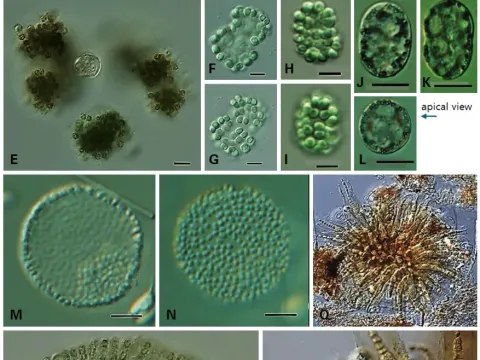
Microscopically, the colonies appear as organized structures, reflecting the genus's characteristic morphology within a shared mucilaginous matrix.
Visual identification often includes the appearance of small, suspended green flakes or larger mats drifting on the water surface.
The proliferation of Gomphosphaeria is largely driven by eutrophication, caused by nitrogen and phosphorus runoff from agricultural fields.
Optimal conditions for expansion include prolonged solar radiation, warm water temperatures, and low water flow, typical of stagnant reservoirs.
Alkaline pH levels in the water column further promote the dominance of this species over other phytoplankton competitors.
The absence of adequate aquatic vegetation or water circulation creates an ideal environment for rapid cyanobacterial development.
Seasonal blooms are most frequently observed during mid-to-late summer when water temperatures reach their annual maximum.
Contaminated water leads to the clogging of drip irrigation lines, nozzles, and filters, disrupting uniform water distribution to crops.
Metabolites released by Gomphosphaeria can potentially inhibit root development and stress sensitive plant species.
The decomposition of large biomass causes a rapid drop in dissolved oxygen, creating hypoxic conditions that harm the aquatic ecosystem.
Irrigation with water containing these cyanobacteria may leave residues on plant leaves, potentially affecting the quality of fresh produce.
Increased maintenance costs for water filtration and pumping infrastructure represent a significant economic burden for farming operations.
Effective prevention involves precise fertilizer application to minimize nutrient runoff into local irrigation sources.
The use of approved biological algaecides provides a controlled approach to managing cyanobacterial populations without environmental damage.
Installing high-efficiency filtration systems helps prevent the entry of algal biomass into the irrigation distribution network.
Implementing mechanical aeration in storage ponds helps maintain water movement and suppresses the growth of Gomphosphaeria.
Regular water quality monitoring is crucial for detecting early signs of blooming and initiating timely mitigation strategies.