
Goss's bacterial wilt
Clavibacter nebraskensis
The causative agent of Goss's bacterial wilt is a Gram-positive bacterium known as Clavibacter nebraskensis. It is a specialized pathogen that primarily targets the vascular system of corn plants.
What the section contains
Goss's bacterial wilt
This bacterium is known for its high resilience in the environment; it can survive for years in infested crop debris, soil, and even within the structure of corn kernels.
Infection begins when the bacteria enter the plant through natural openings like stomata or through wounds caused by weather events such as hail or wind, as well as mechanical damage.
Once inside, the pathogen colonizes the xylem, producing polysaccharides that block the water-conducting vessels, leading to the characteristic wilting symptoms observed in the field.
Dissemination across fields typically occurs via splashing rain, irrigation, and wind-driven water droplets, as well as insects that can transmit the bacteria during feeding activities.
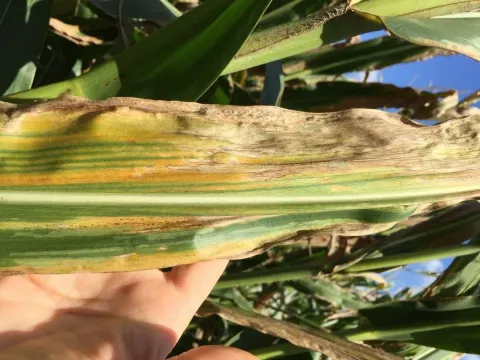
The most recognizable symptoms start as wavy, water-soaked, translucent streaks on the leaves. These often develop into larger necrotic lesions with irregular margins.
A distinctive feature of this disease is the presence of "freckles"—small, dark, water-soaked spots that appear within the leaf lesions, providing a diagnostic sign for identification.
As the infection progresses, the leaves may show a scorched appearance, eventually leading to tissue death. The plant loses its ability to photosynthesize effectively, resulting in stunted growth.
When the stalk of a diseased plant is cut crosswise, a slimy bacterial exudate may be visible, and the vascular bundles often display a brown discoloration indicative of systemic blockage.
In severe cases, systemic infection leads to the death of the entire plant, especially if the infestation occurs early in the growing season, preventing the formation of healthy ears.
Goss's wilt thrives in environments with high humidity and moderate to warm temperatures, typically ranging from 20°C to 30°C.
Inclement weather, particularly wind storms and heavy rains, is a major driver of the disease, as these conditions both damage the plant tissue and help spread the bacteria from infected residue to new foliage.
Poor field hygiene and lack of crop rotation create a reservoir for the bacteria, allowing populations to build up in the soil and debris over multiple seasons.
High plant density can contribute to the severity of the disease by creating a humid microclimate within the canopy that favors rapid bacterial multiplication.
The pathogen is highly opportunistic, and outbreaks are frequently observed in the same fields following years of continuous corn production, especially under irrigation.
The economic impact of Goss's wilt is significant, as it leads to substantial yield losses in both grain corn and silage corn production.
Direct damage to the photosynthetic area of the leaves leads to reduced kernel fill and lower test weight, negatively affecting the final quality and market value of the grain.
In extreme cases of systemic infection, the corn plants may die prematurely, causing severe stand loss and harvest difficulties due to lodging.
The presence of this disease can trigger secondary infections by fungi, which further degrade the plant health and complicate the storage of harvested grains.
Farmers face financial pressure due to the reduced marketability of the crop and the need to implement costly long-term management strategies to contain the pathogen.
The primary and most effective strategy for managing Goss's wilt is the selection and planting of resistant or tolerant corn hybrids.
- Implement crop rotation to break the life cycle of the bacteria in the soil.
- Practice deep tillage to promote the decomposition of infested corn residues.
- Use certified disease-free seed to prevent the introduction of the pathogen to new fields.
- Manage weed hosts that might harbor the bacteria during the off-season.
- Optimize plant density to improve air circulation and reduce humidity within the field.
Chemical control methods, such as antibiotics or copper-based bactericides, are generally not recommended due to their limited efficacy and high costs in large-scale field production.
Regular scouting and early detection are crucial, allowing growers to monitor the spread and take necessary management steps to minimize losses during the following growing seasons.