
Gloeotrichia natans
Gloeotrichia natans
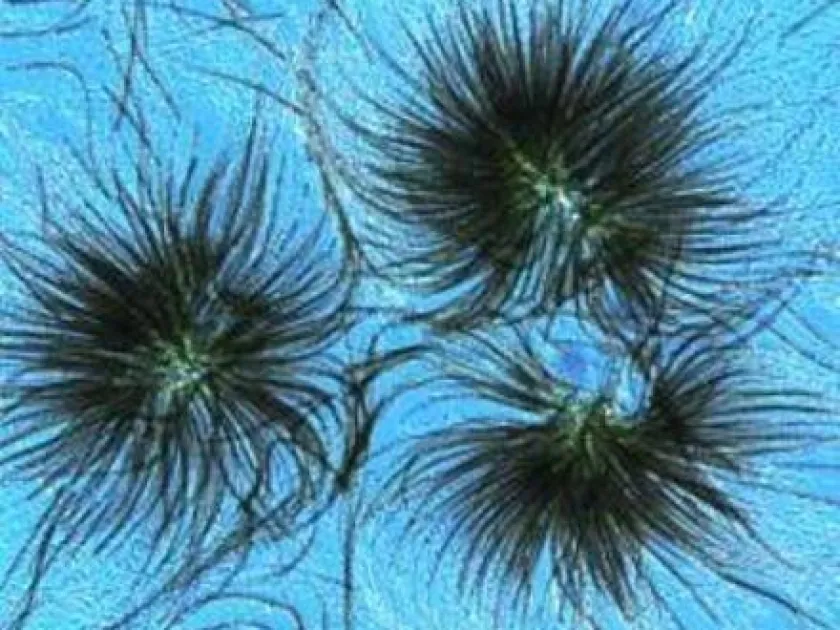
Description
Symptoms
The primary symptom of a Gloeotrichia infestation is the formation of gelatinous, jelly-like clumps of gray or greenish color on water surfaces or plant stems.
In cases of mass development, colonies can cover significant areas of the water surface, creating a film that inhibits gas exchange.
At early stages, colonies attach to submerged plant parts, gradually growing and enveloping the shoots within their mucilaginous structure.
The color of these colonies varies from light olive to brownish depending on light intensity and the chemical composition of the water.
Visual inspection of affected crops shows mechanical strangulation of shoots and depressed photosynthetic activity due to shading.
Pathogen
Gloeotrichia natans is a colonial cyanobacterium (blue-green algae) often identified as a pathogen in aquatic environments and rice paddies.
The pathogen belongs to the Rivulariaceae family and forms macroscopic colonies that are visible to the naked eye as spherical clusters.
A key biological trait of this species is its ability to fix atmospheric nitrogen, providing a competitive edge in nutrient-poor waters.
Its life cycle includes specialized cells known as heterocysts for nitrogen fixation and akinetes, which allow the organism to survive harsh conditions in sediments.
Development of this organism in irrigation ponds or water-based crops is categorized as biological contamination that suppresses plant growth.
Conditions for development
The development of Gloeotrichia natans is directly linked to water eutrophication, especially with increased phosphorus concentrations.
Optimal conditions for growth occur during warm, sunny weather, when water temperatures remain consistently between 20 and 28 degrees Celsius.
Low water flow and lack of turbulence facilitate the settlement of spores and rapid growth of colonies in situ.
Blooms are frequently recorded in late summer when water warming reaches peak levels, significantly stimulating the metabolic rate.
Excessive fertilizer runoff from nearby fields triggers nutrient enrichment and subsequent rapid proliferation of the cyanobacteria.
Why it matters
The primary damage stems from the creation of dense surface mats, leading to a critical drop in dissolved oxygen levels.
Metabolic byproducts of these bacteria can be toxic to various aquatic organisms and higher plants, causing gradual decline.
Massive biomass accumulation leads to secondary water pollution during decomposition, often accompanied by hydrogen sulfide release.
For rice farming, Gloeotrichia causes significant interference by competing with crops for light, space, and mineral nutrients.
Economic losses are associated with reduced yields and the necessity for costly water treatment and cleaning operations.
Protection
The most effective prevention method is controlling fertilizer runoff from fields into water bodies to limit phosphorus influx.
Organizing forced water circulation in smaller ponds or basins is recommended to disrupt the formation of large colonies.
Mechanical removal using fine-mesh nets allows for the extraction of colonies before they begin active spore release.
The use of biological algaecides must be strictly regulated to ensure no harm comes to the cultivated aquatic plants or fish stock.
- Monitoring water mineralization levels.
- Regular sampling and assessment of phytoplankton composition.
- Shading the water surface with appropriate floating vegetation.
Discussion
No discussions yet — be the first.