
Goldenrod yellows
Goldenrod yellows phytoplasma
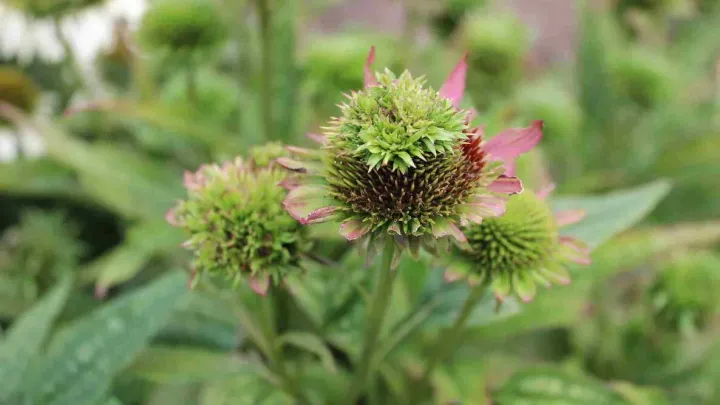
Description
Symptoms
The most characteristic symptom of Goldenrod yellows is chlorosis, where leaves turn a pale yellow or golden color. This yellowing is typically systemic, affecting the entire plant rather than specific localized areas.
Infected plants frequently exhibit symptoms of proliferation and the formation of witches' brooms. This occurs due to the breakdown of apical dominance, causing dormant buds to sprout prematurely into clusters of stunted, spindly shoots.
Leaf deformation is another common sign, with leaves becoming smaller, thickened, and often showing an upward cupping of the margins. The overall growth rate of the plant significantly decreases, leading to stunting.
Virescence, the transformation of floral parts into leaf-like structures, is a hallmark of this phytoplasma infection. The flowers may become completely sterile, preventing any successful seed set or fruit development.
As the disease progresses, the root system undergoes necrosis and decay, failing to support the plant. This leads to the eventual collapse and death of the plant, often preceded by a period of severe physiological decline.
Pathogen
Goldenrod yellows is a plant disease caused by phytoplasmas, which are specialized, cell-wall-less bacteria. These pathogens are obligate parasites that colonize the sieve elements of the plant's phloem, causing systemic infection.
The transmission of the disease is mediated by insect vectors, primarily leafhoppers. When these insects feed on an infected plant, they ingest the phytoplasmas, which then multiply within the insect's body before being transmitted to healthy plants.
Because phytoplasmas lack a cell wall, they are highly susceptible to environmental conditions but highly resilient within their hosts. Their movement through the plant follows the flow of nutrients from source leaves to sink organs, ensuring rapid systemic distribution.
The biological cycle involves an incubation period in the insect vector, during which the pathogen moves to the salivary glands. Once infectious, the leafhopper remains capable of transmitting the phytoplasma for the duration of its lifespan.
Genetic studies have classified the agent responsible for Goldenrod yellows within the group of Aster yellows phytoplasmas. These pathogens are genetically diverse, which often complicates the development of universal diagnostic tools and resistant cultivars.
Conditions for development
The prevalence of Goldenrod yellows is directly linked to the density of leafhopper populations. High humidity and warm temperatures create optimal conditions for the reproduction and activity of these insect vectors.
Weed reservoirs are critical in the disease cycle. Wild Asteraceae species, including goldenrod, act as over-wintering hosts for the phytoplasma, allowing the pathogen to persist even in the absence of cultivated crops.
Fields situated near unmanaged grasslands or hedgerows are at a much higher risk of infection. These areas serve as breeding grounds for vectors that periodically migrate to cultivated fields, introducing the phytoplasma.
Agricultural practices that promote succulent growth, such as heavy nitrogen fertilization, may attract larger numbers of leafhoppers. This indirectly increases the frequency of feeding and the likelihood of successful transmission.
The disease tends to manifest more severely during years with extended warm seasons, which prolong the feeding period of vectors. The lack of cold winters can also increase the survival rate of both the pathogen in weeds and the vectors themselves.
Why it matters
The primary damage caused by Goldenrod yellows is the total loss of the infected plant. Since there is no cure, the disease results in the permanent removal of the affected individual from production.
For nursery and ornamental growers, the loss of plant aesthetics and quality leads to direct economic failure. The inability to sell malformed and discolored plants results in substantial financial losses.
In food crops, the disease reduces both the quantity and quality of the yield. Infected plants often produce small, unmarketable fruits or fail to produce any yield at all, affecting the profitability of the entire farm operation.
The systemic nature of the infection makes it a major concern for biosecurity. Quarantines may be imposed on nurseries or regions to prevent the movement of infected plant material, causing further economic strain.
Long-term harm includes the contamination of the local environment. Once a field is established as a source of the phytoplasma, future plantings in the same or nearby areas are at a high risk of becoming infected.
Protection
Effective management begins with strict sanitation practices. All symptomatic plants should be promptly rogued out and destroyed by burning to eliminate the reservoir of the pathogen.
Controlling leafhopper populations is the most important defensive strategy. Regular applications of systemic insecticides can significantly reduce the number of insect vectors and lower the risk of disease transmission.
Weed management is essential, especially around the perimeter of fields. Eliminating alternative hosts, such as goldenrod and other susceptible perennials, disrupts the survival cycle of the phytoplasma.
Using high-quality, certified pathogen-free starting material is crucial for prevention. Growers should prioritize sourcing plants from tissue culture laboratories that employ rigorous testing protocols.
- Implementing physical barriers like insect-proof netting in greenhouse settings.
- Monitoring insect populations using yellow sticky traps to time insecticide applications.
- Practicing crop rotation to break the cycle of host plants and vectors.
- Establishing buffer zones between susceptible crops and potential reservoirs.
Discussion
No discussions yet — be the first.