
Grapevine infectious degeneration
Grapevine infectious
Grapevine infectious degeneration is primarily caused by the Grapevine fanleaf virus (GFLV), which is a member of the nepovirus group. This virus is a highly destructive systemic pathogen.
What the section contains
Grapevine infectious degeneration
The transmission of the virus is predominantly mediated by soil-borne dagger nematodes, specifically Xiphinema index, which acquire the virus while feeding on infected roots.
Infection also occurs through the use of propagation material derived from infected mother vines. Budwood, rootstocks, and cuttings serve as primary vectors for spreading the virus over long distances.
Although less frequent, mechanical transmission through contaminated pruning equipment is a risk factor that requires strict sanitation protocols in vineyards.
Once inside the vine, the virus spreads to all plant tissues, leading to chronic and irreversible infection that impairs the plant's metabolic processes over time.
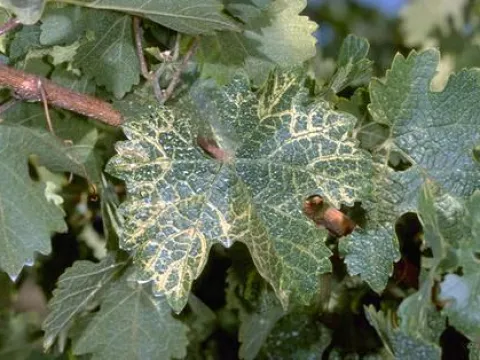
The most characteristic symptom is the fanleaf deformation, where leaves become asymmetrical, with irregular serrations and a distinct yellow mosaic pattern known as infectious chlorosis.
Shoots exhibit short internodes, frequent bifurcation, and zigzag growth patterns, which significantly weakens the structural integrity of the grapevine canopy.
Reproductive success is severely compromised, resulting in millerandage, or "hens and chicks," where clusters have a mix of small, seedless berries and normal-sized ones.
Overall vigor declines steadily; vines show reduced shoot growth, poor wood maturation, and increased susceptibility to winter damage, leading to eventual plant collapse.
Root systems become stunted and dysfunctional, exhibiting reduced fine root density, which prevents the vine from effectively absorbing water and essential nutrients from the soil.
The spread of the disease is highly correlated with the presence and population density of the nematode vector in the soil, which thrives in moist and aerated conditions.
Site history is critical; planting on land that previously hosted infected vineyards often results in immediate virus transmission from dormant roots in the soil to new vines.
Poor weed control encourages the survival of viral hosts, allowing the virus to persist in the environment even when primary crops are removed for rotation.
Warm soil temperatures are conducive to nematode activity, accelerating the transmission rate during the active growing season of the grapevine.
Inadequate sanitation in nurseries and the lack of certified virus-free rootstock contribute significantly to the geographic dissemination of the infectious agent.
The disease causes significant economic losses by drastically reducing grape yields to levels that make commercial cultivation unviable within a few seasons.
Fruit quality is severely impacted; the reduction in sugar accumulation and altered phenolic profiles render the grapes unsuitable for high-quality wine production.
Chronic infection weakens the vines, leading to a shortened lifespan and a loss of investment in the vineyard infrastructure, necessitating expensive replanting.
Because there is no cure, the presence of the disease in a vineyard often requires the complete removal of infected sections to protect adjacent healthy vines from spreading.
The impact extends to international trade, as the presence of grapevine infectious degeneration triggers strict phytosanitary regulations and quarantine measures.
The most effective management strategy is the exclusive use of virus-certified nursery stock that has undergone rigorous indexing and hot-water treatment protocols.
Pre-planting soil fumigation or the use of nematode-suppressing cover crops is essential when replanting on land previously used for grape production to eliminate vectors.
Rigorous vineyard sanitation is required, including the disinfection of pruning tools with appropriate chemical solutions to prevent human-mediated spread during canopy work.
Infected vines should be marked and rogued (removed), including as much of the root system as possible, to stop the virus from serving as a reservoir for local nematodes.
- Monitor vineyard health throughout the season.
- Implement strict quarantine for incoming plant material.
- Maintain long fallow periods before replanting.
- Use resistant rootstock varieties where effective.