
Gloeotrichia
Gloeotrichia
Description
Symptoms
Infestation is characterized by the appearance of jelly-like colonies floating on the water surface or attached to the submerged parts of young rice plants.
Water in affected paddies often becomes turbid, taking on a greenish or brownish tint, accompanied by a distinct odor resulting from cellular decomposition.
During peak development, these cyanobacteria can form thick mats that cover the water surface, restricting the light required by rice seedlings for photosynthesis.
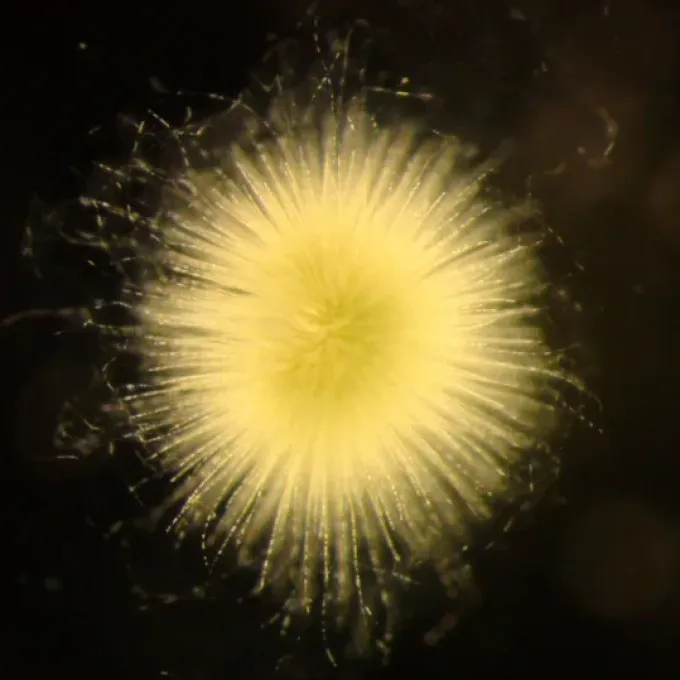
Individual colonies may appear as small, fuzzy balls that can easily be mistaken for debris until they begin to spread rapidly across the water surface.
Upon water drainage, a characteristic dark or bluish-green slimy film may remain on the soil surface, confirming the presence of significant cyanobacterial biomass.
Pathogen
Gloeotrichia is a genus of filamentous cyanobacteria (blue-green algae) belonging to the order Nostocales, recognized for forming macroscopic colonies in aquatic environments.
These microorganisms are characterized by their ability to form spherical or cushion-shaped mucilaginous colonies, often visible to the naked eye as gelatinous clusters.
A distinctive biological trait is their nitrogen-fixing capability, which grants them a competitive advantage in nutrient-rich waters commonly found in irrigated agricultural systems.
Their life cycle includes the production of akinetes, which are dormant spores that survive in bottom sediments, allowing the population to persist through harsh conditions and seasonal changes.
In agronomy, Gloeotrichia is viewed as an aquatic weed that disrupts the delicate balance of rice field ecosystems, often interfering with early crop establishment.
Conditions for development
Eutrophication, defined by an excess of phosphorus and nitrogen in the water, is the primary driver for rapid Gloeotrichia colonization in rice fields.
Optimal growth temperatures for these cyanobacteria range from 20°C to 30°C, aligning perfectly with the primary growing season for rice crops.
Stagnant or slow-moving water in irrigation systems creates a stable environment that encourages the proliferation of floating colonies from dormant akinetes.
High light intensity is essential, as these organisms are photoautotrophs and rely on solar radiation to fuel their rapid reproductive cycles.
Neutral to slightly alkaline water pH levels enhance the metabolic activity of Gloeotrichia, facilitating faster expansion across the field surface.
Why it matters
The primary damage caused by Gloeotrichia involves physical obstruction and competition for nutrients, which suppresses the growth of developing rice plants.
Mucilaginous colonies can wrap around stems and roots, creating physical barriers that impede the plant's ability to absorb essential nutrients and exchange gases.
Massive blooms can lead to severe diurnal fluctuations in dissolved oxygen levels, causing physiological stress to the rice crop and reducing overall vigor.
The metabolic byproducts of these cyanobacteria can exhibit allelopathic effects, potentially inhibiting the germination and root elongation of young rice seedlings.
Accumulation of biomass complicates irrigation management, as decaying material can clog water control structures and increase maintenance requirements.
Protection
Integrated water and nutrient management is the most effective approach, focusing on reducing nutrient runoff to prevent the eutrophication of paddies.
Maintaining proper water circulation and managing water depth can mechanically disrupt the stability required for colony formation and expansion.
Chemical control via copper-based algaecides can be employed when infestation levels threaten crop survival, provided they are applied according to label regulations.
Deep plowing following the harvest cycle can bury akinetes deep into the soil profile, reducing their viability and subsequent emergence in the following season.
- Optimize fertilizer application rates.
- Improve water drainage and flow efficiency.
- Monitor water quality for early detection of blooms.
Discussion
No discussions yet — be the first.