
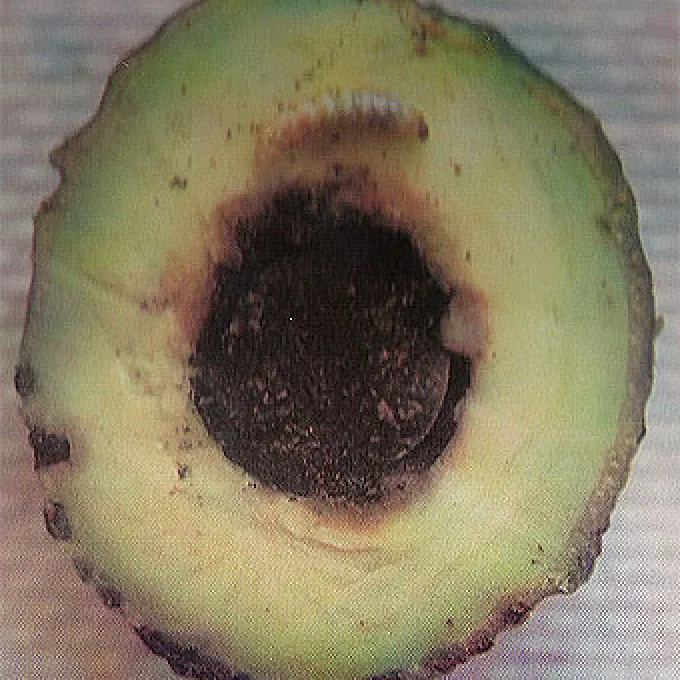
Description
Symptoms
The most prominent sign of the disease is the development of sunken or swollen cankers on the bark of trunks and main branches. These lesions often show vertical cracking of the bark tissue.
In many cases, the affected area exhibits sap or gum exudation, a defensive reaction that often fails to contain the expanding fungal colony. The tissue within the canker eventually becomes dark and necrotic.
As the infection spreads, the canopy of the tree may show signs of decline, including chlorosis (yellowing), wilting, and premature leaf drop, as the tree’s water supply is severely restricted by the trunk damage.
Upon closer examination, small black fruiting bodies of the fungus may appear on the surface of the dead bark, signaling that the pathogen is actively producing spores for further dissemination.
When cutting into the wood near a canker, one might observe discolored wood fibers, indicating that the fungus has deeply penetrated the xylem, potentially causing systemic weakness.
Pathogen
The disease is caused by the ascomycete fungus Physalospora perseae, which is known for its ability to invade the woody tissues of various tree species, including avocado. It functions as an opportunistic parasite.
The pathogen completes its life cycle by producing spores that are disseminated primarily through rain splashes, wind, and mechanical transfer via contaminated pruning tools. This allows the fungus to establish new infection sites efficiently.
The fungus typically enters the plant host through natural openings or physical wounds such as pruning cuts, frost cracks, or sites damaged by wood-boring insects. Once inside, it initiates tissue necrosis.
Within the host, the mycelium colonizes the vascular system and cambium, interfering with the plant's nutrient and water transport mechanisms. The fungus can persist in woody debris, acting as a reservoir for recurring infections.
The survival strategy of Physalospora perseae involves the formation of resilient fruiting bodies (pycnidia) within the bark, which protect the pathogen during dry or unfavorable weather conditions.
Conditions for development
High humidity and moderate temperatures are the most critical factors favoring the development and spread of Physalospora perseae. Prolonged wet weather provides the moisture required for spore germination.
Poor orchard management practices, such as failing to seal large pruning wounds or planting trees at too high a density, significantly increase the vulnerability of the trees to fungal colonization.
Stressed trees—due to poor irrigation, soil compaction, or nutrient deficiencies—lack the vigor needed to naturally seal off infections, making them easy targets for the pathogen.
Insects that bore into the bark not only weaken the tree but create open wounds that serve as ideal entry points for the fungal spores to establish themselves in the underlying tissues.
Inadequate airflow within the orchard due to poor pruning techniques keeps the bark surface moist for longer periods, which dramatically enhances the probability of a successful infection.
Why it matters
Physalospora canker poses a severe threat to avocado production by compromising the structural integrity of the tree. The weakening of the main stem or scaffold branches can lead to mechanical failure during high winds or heavy fruiting.
The disease significantly reduces the tree's photosynthetic capacity, leading to lower fruit yields and poor quality. Severely infected trees eventually cease to be economically viable.
If left unmanaged, the infection moves systematically throughout the tree. Ring-barking caused by the canker will inevitably kill the affected branch or, in severe cases, the entire tree.
The chronic nature of this disease means that producers face recurring maintenance costs, constant monitoring, and the potential need to remove and replace entire sections of the orchard.
Marketability is also impacted, as trees under constant stress from fungal infection produce fewer and smaller fruits, failing to meet quality standards for export or premium markets.
Protection
Sanitation is the cornerstone of managing this disease. Infected branches must be pruned out, cutting at least 15–20 cm below the visible canker, and all removed material should be burned or buried.
Strict disinfection of pruning tools with a bleach solution or high-grade disinfectant after working on each tree is essential to prevent the spread of spores from infected to healthy trees.
Applying protective wound dressings or antifungal pastes to all cuts is a vital preventive measure to ensure the pathogen cannot enter the fresh, exposed tissue.
Preventative fungicide sprays, particularly those containing copper, can be used to protect the bark during seasons characterized by high rainfall and humidity, creating a physical barrier against spore germination.
- Improve orchard aeration through proper pruning.
- Maintain tree vigor with balanced fertilizer application.
- Regularly monitor trunks for early signs of lesions.
- Manage bark-damaging pests with integrated pest management.
Pathogens and affected parts
Affects crops · 1
Discussion
No discussions yet — be the first.