
Longidorus africanus
Longidorus africanus
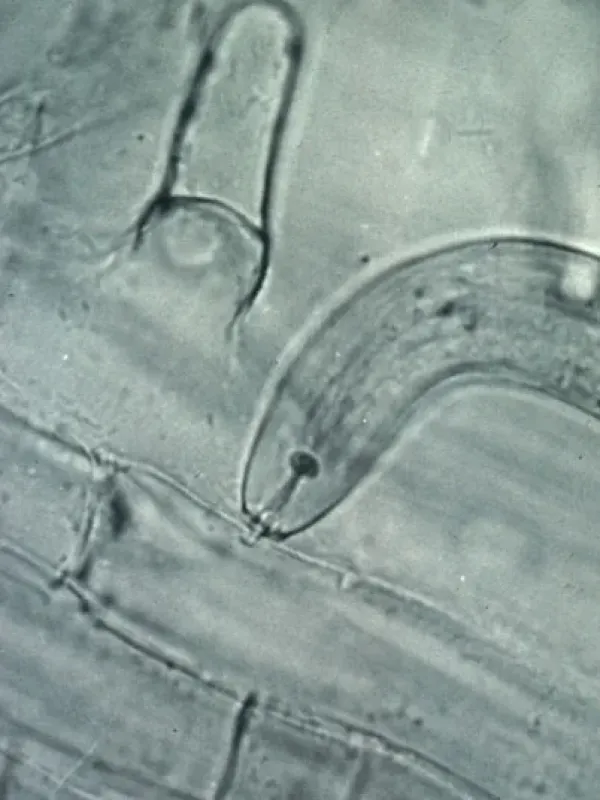
Description
How to identify
Longidorus africanus is a large ectoparasitic nematode that lives in the soil. Belonging to the family Longidoridae, it is characterized by its exceptionally long body, which can reach several millimeters, and a long, needle-like stylet used for feeding on plant roots.
Identification of this pest is primarily conducted through laboratory soil sampling. It is impossible to identify the species by the naked eye; therefore, microscopy is essential to examine the morphological features, such as the shape of the odontophore and the tail structure.
These nematodes thrive in sandy and sandy-loam soils, which allow for easier movement toward host roots compared to clay soils. They prefer warm temperatures, with peak activity typically observed in the 20°C to 25°C range.
The life cycle consists of the egg, four larval stages, and the adult phase. Unlike many other nematode species, all mobile stages are capable of feeding on roots, making the population impact significant even at moderate density levels.
An important biological aspect is their role as vectors for certain soil-borne viruses, such as nepoviruses. This makes them a dual threat: they cause mechanical damage to roots and facilitate the transmission of viral diseases in high-value vegetable crops.
What it damages
The host range of Longidorus africanus is broad, affecting various vegetables, berries, and ornamental plants. Tomato, pepper, lettuce, and strawberry crops are particularly susceptible to root damage caused by this nematode.
Feeding occurs at the root tips, which leads to the formation of terminal galls or swelling. This process destroys the root meristem, preventing normal root growth and causing the root system to remain stunted and poorly developed.
Above-ground, the damage manifests as severe stunting, chlorosis, and wilting. Because the plant cannot absorb sufficient water and nutrients due to the compromised root system, it becomes highly susceptible to environmental stress, especially during high heat.
Yield loss is not only due to poor growth but also due to the transmitted viral diseases. Infected plants may exhibit mosaic leaf patterns, fruit deformation, and significant drops in total yield and product quality.
- Stunted root system development.
- Necrotic lesions on root tips.
- General plant wilting in hot conditions.
- Viral leaf symptoms.
Signs of infestation
In field conditions, signs of infection often appear as patchy growth or circular areas where plants are significantly smaller than the surrounding healthy crop. These patches expand slowly over time as the nematode population spreads.
Root system examination reveals thickened, stubby roots that lack healthy lateral branches and root hairs. The roots appear distorted and stunted, a direct response to the toxins injected during the nematode's feeding process.
In addition to root symptoms, viral infection signs may become apparent. These include leaf curling, yellowing, and mosaic patterns that indicate the transmission of secondary viral pathogens by the nematode vector.
During dry spells, infested plants show immediate stress symptoms. They wilt quickly during the day even if the soil moisture content is adequate, as the damaged roots are unable to maintain the necessary water flow to the leaves.
Diagnosis requires a quantitative soil analysis. Once a threshold of nematodes per unit of soil is exceeded, the impact on crop production becomes economically significant, necessitating immediate management interventions.
Control measures
Integrated Pest Management (IPM) is essential for controlling Longidorus africanus. Crop rotation remains a primary strategy, where non-host crops are grown to interrupt the life cycle and reduce the soil population density of the nematode.
Sanitation is critical; all equipment and machinery must be thoroughly cleaned of soil before moving between fields to prevent the spread of nematodes. Soil movement is the most common way this pest enters new areas.
Pre-planting soil fumigation is an effective, albeit intensive, method to reduce high populations. This must be balanced with environmental regulations and safety protocols to protect soil health and surrounding ecosystems.
Using certified, disease-free planting material is the most efficient way to prevent initial infestation. Ensuring that seedlings are grown in sterilized soil or substrate prevents the introduction of the nematode into new farm land.
Biological control methods are increasingly being explored, including the use of beneficial microbes and fungi that are antagonistic to nematodes. These methods, combined with improved soil health management, provide a more sustainable approach to long-term control.
Causes diseases · 2
Discussion
No discussions yet — be the first.