
Longidorus breviannulatus
Longidorus breviannulatus
Description
How to identify
Longidorus breviannulatus is a species of ectoparasitic nematode belonging to the family Longidoridae. As a member of the order Dorylaimida, this pathogen is characterized by its large body size and a specialized feeding apparatus.
The primary identification feature is an elongated, needle-like stylet used to pierce plant root cells. Unlike endoparasitic nematodes that enter roots, this species remains in the soil, feeding externally on root tips.
They thrive in sandy and coarse-textured soils. The physical structure of these soil types allows the nematodes to move efficiently between particles to locate and colonize the roots of host plants.
Their life cycle includes an egg stage followed by four juvenile stages. Each stage must successfully feed on plant roots to progress, making them persistent pests throughout the growing season.
Expert identification requires laboratory analysis, involving the extraction of nematodes from soil samples and examination under high-magnification microscopy to observe specific diagnostic features of the head and tail.
What it damages
The damage caused by Longidorus breviannulatus is primarily focused on the root architecture. By feeding on the tips, the nematode disrupts the meristematic tissue, preventing normal root growth and branching.
This disruption prevents the plant from effectively absorbing water and essential soil nutrients. As a result, even in favorable conditions, the plants exhibit stunted growth and reduced vigor.
Secondary infections are a major issue. The feeding sites created by the nematode provide an entry point for various soil-borne bacteria and fungi, leading to root rot and further plant deterioration.
Young seedlings are particularly vulnerable. Heavy infestations can lead to total crop failure, as the roots are damaged before they can establish a proper anchorage in the soil profile.
Significant economic losses occur when large populations reach the economic injury level, particularly in crops like corn, cereals, and certain vegetable varieties, causing irregular plant stands.
Signs of infestation
Field symptoms often appear as localized patches of stunted or chlorotic plants. These patches may expand over time if the nematode population is left unmanaged.
Above-ground signs include premature wilting, pale foliage, and a general lack of growth compared to healthy plants in the same field. These symptoms are often more pronounced during periods of drought or nutrient stress.
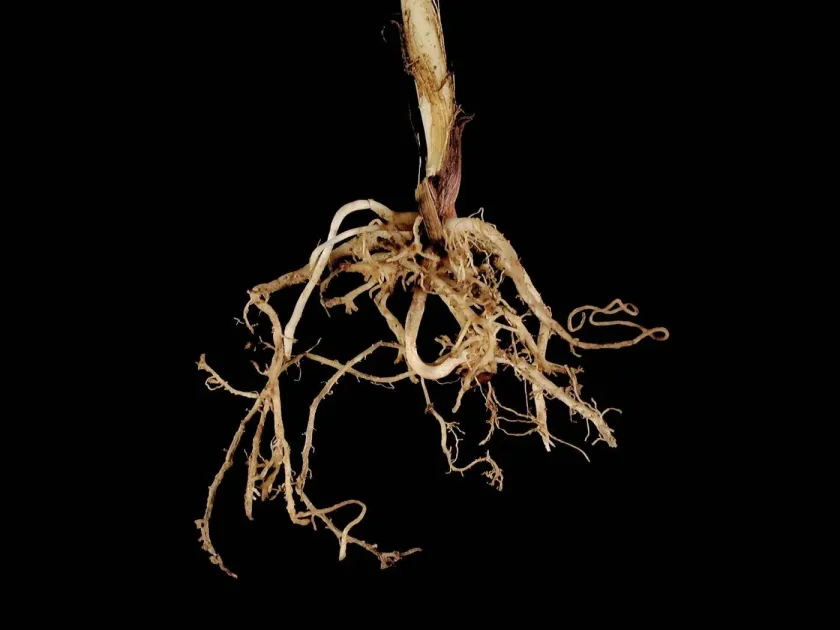
Root system examination reveals distinct symptoms, such as the absence of fine lateral roots and the presence of stubby, swollen root tips. These deformed tips are a diagnostic sign of nematode feeding.
Plants within infested areas have poor root anchorage and can often be easily pulled from the soil. The lack of secondary root development leaves the plant unable to withstand environmental pressures.
While visual symptoms suggest a potential nematode problem, they are not species-specific. Soil and root testing are essential to confirm the presence of L. breviannulatus specifically.
Control measures
Integrated Pest Management (IPM) is essential for controlling this pathogen. Crop rotation with non-host crops is the most effective long-term strategy to reduce nematode populations in the soil.
Maintaining soil health and fertility helps plants tolerate damage, although it does not directly eliminate the nematode. Weed control is crucial, as many weeds act as alternative hosts that sustain populations.
Chemical control via nematicides is an option for high-value crops, but its use is often strictly regulated due to environmental impact and high costs. Application must be timed precisely to match nematode activity.
Biological control methods, using fungi or bacteria that parasitize nematodes, are an emerging field of research that offers a more sustainable approach for the future of commercial agriculture.
- Practice strict sanitation of farm equipment to prevent spread
- Use certified, nematode-free seeds and transplants
- Conduct routine soil sampling to monitor nematode densities
Causes diseases · 1
Discussion
No discussions yet — be the first.