
Longidorus
Longidorus
Description
How to identify
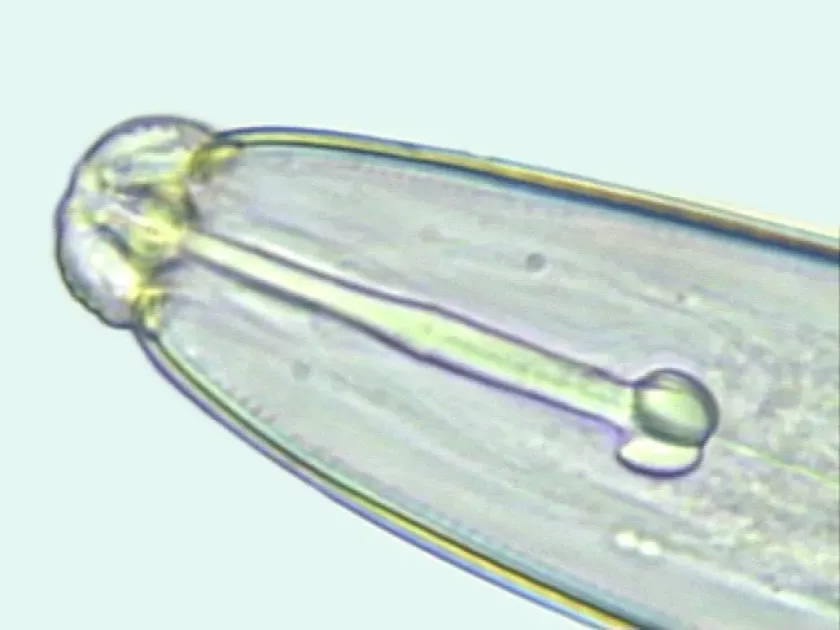
Longidorus, commonly known as needle nematodes, belongs to the family Longidoridae within the order Dorylaimida. They are recognized as significant ectoparasites that live in the soil and feed on plant roots using an exceptionally long, needle-like stylet.
These nematodes are distinct due to their relatively large size, often reaching lengths of 5 to 10 millimeters, which makes them visible to the naked eye or under low-magnification lenses when isolated from soil samples.
Their life cycle is characterized by a slow development process. They transition through an egg stage and four subsequent juvenile stages, each requiring a molt. The entire development from egg to adult can take a full growing season, depending on soil temperature and moisture conditions.
Longidorus species are highly adaptable and can survive in the soil for long periods, even in the absence of a preferred host plant. They thrive in various soil types but are most commonly associated with light, sandy, and well-aerated soils where their movement is easier.
The primary concern regarding these organisms is their role as biological vectors for several nepoviruses (nematode-transmitted polyhedral viruses), such as the Raspberry Ringspot Virus, which causes systemic infections in numerous perennial crops.
What it damages
The host range of Longidorus includes a wide variety of economically important plants, such as grapes, strawberries, raspberries, fruit trees, and various vegetable crops. They cause both direct mechanical damage and indirect viral infections.
When feeding, the nematode inserts its stylet deep into the root cortex. The injection of saliva triggers a physiological response in the plant, often leading to terminal galls, stunted root development, and the loss of essential root hairs, effectively starving the plant.
Above-ground symptoms typically manifest as patches of stunted, chlorotic, or unthrifty plants. In severe cases, the entire root system becomes underdeveloped, reducing the plant's ability to withstand drought or nutritional stress, leading to significant yield losses.
The viral transmission by Longidorus is particularly devastating. Once a plant is infected with a nematode-borne virus, it often shows symptoms like leaf mottling, necrosis, and deformation, which cannot be cured, leading to the rapid decline of entire orchard or vineyard blocks.
Economic impact is measured not just in direct loss of production but also in the cost of removing infested plantings, soil disinfection, and the necessity of fallow periods before replanting susceptible cultivars.
Signs of infestation
The presence of needle nematodes is often first identified by the uneven performance of crops in the field. Infested areas appear as distinct patches where plants are significantly shorter and less vigorous than the surrounding healthy growth.
Upon inspecting the root systems, you will observe characteristic deformities. The root tips are frequently swollen or gall-like, and there is often a lack of branching and fine feeder roots, giving the root system a stunted, «stubby» appearance.
- Patchy growth and stunted development in fields.
- Visible galls and swellings on the root tips.
- Reduced root branching and lower root mass.
- Symptoms of viral disease, including ringspot patterns on leaves.
- Positive identification through soil and root lab analysis.
Since these nematodes move deep into the soil profile, traditional sampling might miss them. It is crucial to sample both the topsoil and the deeper root zone where the nematodes are most active during the growing season.
Control measures
Prevention is the most effective management strategy. Using certified, nematode-free planting material is essential for establishing long-lived crops, as it prevents the introduction of both the nematode vector and the associated viral diseases.
Soil fumigation prior to planting is a standard practice in intensive agriculture to reduce initial nematode populations. This procedure requires careful application to ensure that the active ingredients penetrate the soil sufficiently to reach the depths where nematodes reside.
Cultural control practices include long fallow periods, which help exhaust the nematode population by removing hosts. Rotating fields with non-host crops or using specific cover crops, like certain brassicas that release biofumigant compounds, can also suppress nematode numbers.
Biological control using beneficial soil fungi or bacteria that parasitize nematodes is an emerging area of research, though results may vary based on environmental conditions and soil chemistry.
Regular monitoring of field history and soil sampling is recommended before investing in high-value perennial crops. If high populations are detected, site selection should be reconsidered to avoid long-term crop losses and viral infestations.
Causes diseases · 2
Discussion
No discussions yet — be the first.