
Physoderma disease of clover
Physoderma trifolii
Description
Symptoms
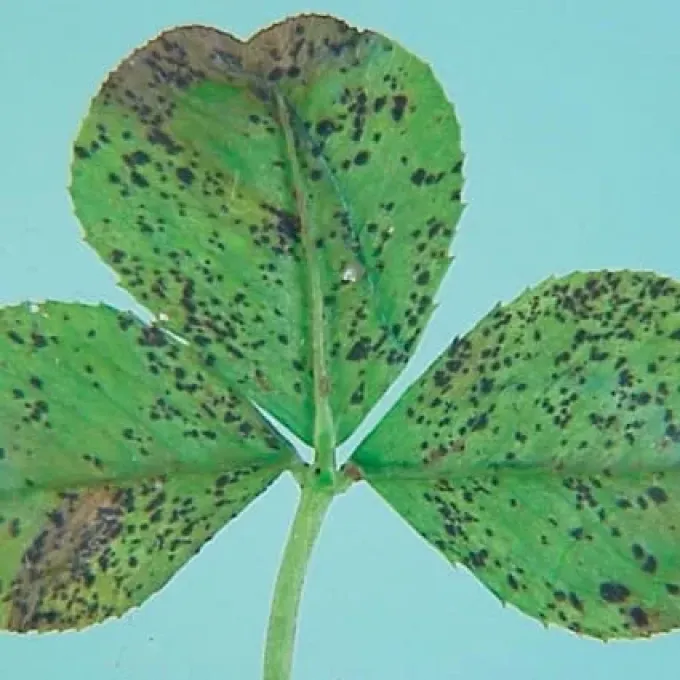
The early symptoms of Physoderma infection are characterized by small, indistinct spots on the leaves, which often develop along the main veins.
As the disease progresses, these spots develop into raised pustules or galls. These structures give the leaf surface and petioles a distinct bumpy and rough appearance.
In cases of severe infection, leaves turn chlorotic, curl, and eventually necrotize. This reduction in leaf area directly impairs the plant's ability to photosynthesize effectively.
Stem deformations are common in affected plants, leading to stunted growth and a general lack of vigor across the affected stand.
Diagnosis in the field is often confirmed by observing these characteristic pustules, which distinguish this disease from general nutritional deficiencies or other leaf spots.
Pathogen
The causative agent of the disease is the fungus Physoderma trifolii, which belongs to the Chytridiomycota phylum. It is an obligate parasite specifically adapted to legumes.
The pathogen's life cycle is characterized by the formation of resting spores (zoosporangia), which allow the fungus to persist in the soil for several years even in adverse environmental conditions.
Upon the return of moisture, these spores release motile zoospores that migrate through water films to infect the host tissue, initiating the parasitic stage of the life cycle.
While primarily affecting red clover (Trifolium pratense), related species in the genus Physoderma are known to infect other plants like tobacco and Liquidambar, reflecting a broader ecological niche for the genus.
Understanding the biology of this pathogen is crucial for farm management, as its reliance on host metabolism makes it difficult to eradicate once the primary infection is established.
Conditions for development
The primary driver of infection is high moisture. Heavy rainfall, high humidity, and poor soil drainage create the ideal environment for zoospore movement.
Thick, dense crop canopies restrict airflow, keeping the foliage wet for longer periods and facilitating the spread of the fungus throughout the field.
Moderate temperatures are optimal for the germination of resting spores, meaning that cool, wet springs often trigger significant outbreaks.
Crop debris left on the surface serves as a reservoir for the pathogen. If not properly incorporated into the soil, this debris guarantees a high infection pressure for the next season.
Field history is vital: continuous cropping of clover in the same area without proper rotation significantly increases the inoculum density in the soil profile.
Why it matters
Physoderma disease significantly reduces the dry matter yield of clover, which directly impacts the quality and quantity of forage available for livestock.
The loss of foliage and general plant vigor leads to a decrease in the overall nutritional value of the clover stand, making the forage less desirable.
Reduced winter hardiness is a major concern, as the plants are unable to store sufficient energy reserves to survive extreme winter weather due to the parasitic burden.
Seed production is often compromised, as the energy required for flowering and seed maturation is diverted to combat the chronic fungal stress.
In severe infestation, the long-term viability of the stand is threatened, forcing farmers to terminate the crop prematurely, resulting in economic losses.
Protection
Implementing a long-term crop rotation cycle, where legumes are grown on the same field no more than once every five years, is the most effective preventative measure.
Deep plowing or effective incorporation of plant residues helps to bury the inoculum, accelerating the degradation of the resting spores by soil microbes.
Selection of resistant or tolerant cultivars remains the best defense, as genetic immunity is the most cost-effective solution for large-scale production.
Field drainage management is essential to prevent waterlogging, thereby reducing the chances of zoospore transmission during critical growth stages.
In high-pressure scenarios, fungicide application might be considered, though it is usually reserved for high-value seed crops rather than bulk forage production.
Pathogens and affected parts
Affects crops · 3
Discussion
No discussions yet — be the first.