
Description
Symptoms
The primary symptom of Gnomonia infection is the appearance of small, reddish-brown spots on the young canes and leaf petioles of Rubus idaeus (red raspberry). Over time, these spots expand, covering significant areas of the stem, and often develop a grayish center.
As the disease progresses, numerous small black dots—pycnidia (fungal fruiting bodies)—form on the affected tissues. These are easily visible to the naked eye and serve as a crucial diagnostic marker for identifying the pathogen in the field.
Leaves affected by the fungus often yellow, curl, and drop prematurely, causing the lower parts of the canes to become bare. In severe cases, the infected stems crack and the bark peels, making the plant highly susceptible to winter frost damage.
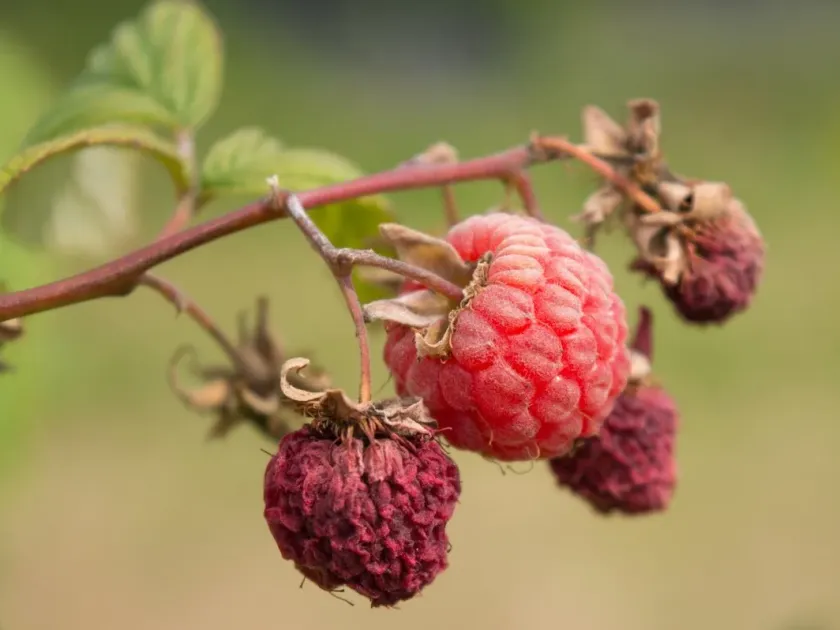
The disease impacts common raspberries, reducing overall plant vigor. It often affects fruit stalks, leading to the deformation of berries or causing them to dry up before reaching maturity, which significantly reduces the market value of the crop.
Towards the end of the growing season, a characteristic fungal mycelium may be observed on dying plant parts, which remains active even under adverse conditions, preparing for overwintering in plant debris.
Pathogen
The causal agent of this disease is the ascomycete fungus Gnomonia rubi (syn. Gnomonia idaei). This pathogenic organism parasitizes the living tissues of the raspberry plant, causing specific localized necroses.
The fungus overwinters primarily as perithecia or mycelium on old, infected canes and fallen leaves. As spring warmth and moisture levels increase, the pathogen begins to produce spores, which are disseminated by wind and rain splashes.
The lifecycle of the fungus is closely linked to environmental humidity. Spores land on young raspberry canes, where, in the presence of free moisture, they germinate and penetrate the plant tissue through micro-wounds, natural openings, or epidermis pores.
The pathogen secretes specific enzymes that degrade plant cell walls, facilitating the spread of the mycelium throughout the cane. This process disrupts the plant's metabolism and suppresses photosynthesis in the infected areas.
A biological feature of this pathogen is its high survival capacity in unfavorable conditions. Even during hard winters, the fungus remains viable within plant tissues, reactivating immediately upon the first signs of spring warming.
Conditions for development
High air and soil humidity, especially during prolonged rainy periods and heavy dew, favor the development of Gnomonia. The optimal temperature range for infection is between 15 and 22 degrees Celsius.
Densely planted raspberry patches with poor airflow create an ideal microclimate for fungal reproduction. Stagnant air and excess moisture in the root zone significantly accelerate the rate of spore dispersal throughout the entire plantation.
Violations of good agricultural practices, such as failing to prune and thin out canes, are key risk factors. In overcrowded conditions, the infection spreads from diseased plants to healthy ones very rapidly.
Imbalanced plant nutrition, particularly an excess of nitrogen fertilizers, lowers the plant's natural immunity. Rapidly growing, soft tissues become much easier targets for the pathogen to colonize.
Mechanical damage to stems, caused by insect pests or careless soil cultivation, provides entry points for the infection, allowing the fungus to colonize the plant without resistance.
Why it matters
Gnomonia causes significant economic losses by substantially reducing the yield of raspberry plantations. Infected canes become brittle and frequently snap under the weight of the fruit or during high winds.
The disease weakens the entire plant, causing the bushes to struggle through the winter and often freeze during cold snaps. This leads to sparse plantings and the need for premature plantation replacement.
Crop quality deteriorates: berries on infected fruit stalks become small, acidic, and lose their shelf life, making them unsuitable for storage and transport. In some cases, complete loss of a portion of the harvest is observed.
The constant presence of the pathogen in the raspberry patch necessitates additional expenses for protective measures and the application of fungicides, increasing production costs.
In neglected cases, a plantation may lose its commercial viability within 3–4 years of initial infection, making further profitable cultivation on that site impossible.
Protection
The foundation of Gnomonia control is strict adherence to agricultural best practices: timely pruning and burning of infected canes, and the removal of fallen leaves which serve as a source of infection.
It is recommended to avoid overcrowding by ensuring good ventilation and light penetration in the rows. This prevents the creation of the humid microclimate required for fungal proliferation.
Chemical control should focus on prevention. Early spring applications of Bordeaux mixture (1%) or other copper-based fungicides before bud break are highly effective.
During the growing season, if the first signs of disease appear, authorized systemic fungicides may be used, provided that pre-harvest intervals are strictly observed.
Selecting resistant raspberry cultivars and maintaining high soil fertility—providing adequate potassium and phosphorus fertilizers—is essential to enhance the plants' natural resistance to diseases.
Pathogens and affected parts
Affects crops · 1
Discussion
No discussions yet — be the first.