
Raspberry Gnomonia
Gnomonia rubi
Description
How to identify
Gnomonia rubi is an ascomycete fungus that acts as a serious pathogen for plants within the Rubus genus. It belongs to the family Gnomoniaceae and the order Diaporthales.
The fungus survives the winter primarily in infected canes as mycelium or pycnidia. During the spring, favorable environmental conditions trigger the release of spores that initiate new infections.
The disease cycle is driven by moisture, with rainfall serving as the primary mechanism for spore dispersal from old canes to new, healthy shoots.
It is classified as a hemibiotroph or necrotroph, meaning it kills host tissue to obtain nutrients, causing significant localized damage to the epidermis and cortical tissues of the stems.
Identification is confirmed by observing the characteristic black pycnidia (fruiting bodies) within the light-colored centers of necrotic lesions on the raspberry canes.
What it damages
The primary host is the red raspberry (Rubus idaeus). The fungus infects the canes, leaves, and occasionally the pedicels, causing severe physiological stress to the plant.
Damage results in the disruption of vascular bundles, which inhibits the transport of water and nutrients, leading to the wilting and death of affected cane sections.
In addition to direct yield loss, the infection compromises the overall vigor of the plantation, making the plants more susceptible to winter frost and other secondary pathogens.
Plantations with poor airflow are particularly vulnerable, as the pathogen thrives in microclimates with high humidity and prolonged leaf wetness.
Failure to manage the disease can result in the loss of entire sections of the plantation, requiring significant replanting efforts and reducing the long-term profitability of the crop.
Signs of infestation
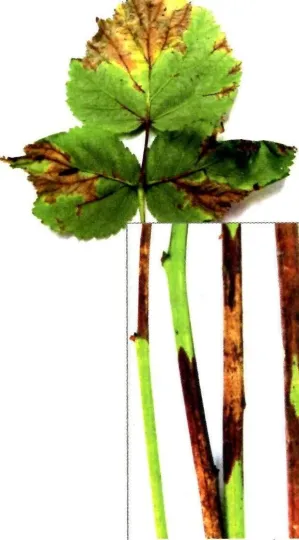
The initial signs manifest as diffuse, purple-brown spots on the stems, which eventually turn grey in the center as the tissue dies.
Numerous small, black, dot-like pycnidia appear in the light-colored centers of these spots, which is a hallmark diagnostic feature of Gnomonia rubi infection.
In severe cases, lesions may girdle the cane, leading to the rapid yellowing of leaves and subsequent death of the shoot tip above the lesion.
Cracking of the bark occurs as the tissue necrotizes, providing entry points for other fungal pathogens and pests that further weaken the raspberry plant.
Premature leaf drop is frequently observed, as the fungal infection spreads to the petioles, causing them to detach from the main stem.
Control measures
Effective management relies on a combination of cultural practices, such as choosing well-drained sites and ensuring adequate spacing between rows to facilitate airflow.
Sanitation is critical; all infected canes must be pruned and destroyed immediately after harvest to eliminate the primary source of inoculum for the following year.
Integrated Pest Management (IPM) strategies include the timely application of fungicides during the leaf-out stage to protect developing tissues from initial infection.
Maintaining balanced soil fertility, especially by avoiding excessive nitrogen, helps to prevent overly succulent cane growth that is more prone to fungal attacks.
- Regular sanitation: removal and destruction of diseased plant parts
- Improved air circulation through canopy management
- Proper site selection to prevent moisture accumulation
- Chemical control using copper-based or systemic fungicides
Causes diseases · 1
Discussion
No discussions yet — be the first.