

Description
Symptoms
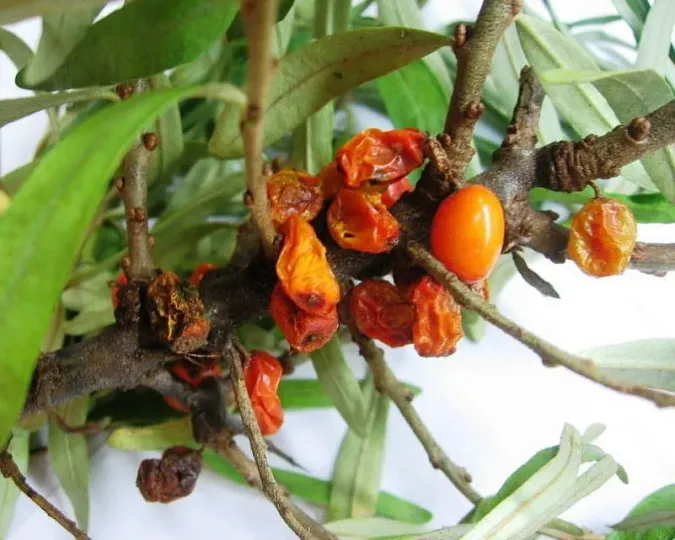
Early symptoms of endomycosis include the appearance of localized chlorotic spots on leaves and stems. As the infection progresses, these spots expand, often turning into necrotic lesions.
A distinctive sign is the development of a fungal bloom on the surface of the infected areas. This bloom may appear as a whitish or gray powder, consisting of the pathogen’s reproductive structures.
Infected fruits and seeds often exhibit signs of decay or softening. They may lose their structural integrity, become deformed, and develop unpleasant odors due to secondary decomposition.
Systemic symptoms may occur, characterized by stunted plant growth, leaf chlorosis, and premature wilting. If the stem is affected, the transport of water and nutrients is severely impaired.
Visual inspection often reveals areas of tissue collapse. In severe cases, the entire plant organ may shrivel and die, significantly reducing the overall health and vitality of the crop.
Pathogen
The causative agent of the disease is a microscopic fungus of the Endomyces genus. This pathogen is a member of the Ascomycota phylum and is known for its ability to invade and colonize various plant tissues.
The fungus propagates through the production of mycelium and spores. These spores can remain dormant in the soil or crop debris for extended periods, waiting for favorable environmental conditions to emerge.
Upon infection, the fungus secretes specific enzymes that break down plant cell walls. This action facilitates the penetration of the pathogen into the deeper layers of the plant anatomy.
The life cycle of Endomyces is closely linked to the availability of nutrients within the host tissue. Once established, the fungus rapidly expands, disrupting the plant's metabolic processes.
Due to its high adaptability, the pathogen can survive in diverse ecological niches. It primarily targets weakened or damaged plant organs, but can also attack healthy tissue under high humidity.
Conditions for development
High humidity and consistent moisture levels are the primary triggers for endomycosis outbreaks. Free water on leaf surfaces provides the necessary environment for spore germination.
The fungus thrives in moderate to warm temperature ranges, typically between +18 and +26 degrees Celsius. These conditions allow for rapid mycelial proliferation and sporulation.
Poor aeration within dense crop canopies creates a microclimate characterized by reduced evaporation. This stagnant, humid environment is extremely conducive to the spread of the disease.
Mechanical injuries caused by farm equipment, hail, or pests serve as entry points for the fungus. Plants that have already been compromised by these factors are significantly more susceptible.
Poor soil management and inadequate field hygiene lead to a buildup of inoculum. The presence of infected crop residues from previous seasons acts as a primary source of infection for new crops.
Why it matters
Endomycosis causes significant yield losses by reducing both the quality and quantity of harvested products. Crops affected by the fungus often show poor storage stability and rapid decay.
The damage to generative parts such as seeds and fruits leads to a direct loss of market value. This makes the disease a major economic challenge for farmers and agricultural producers.
Stunting and early leaf drop reduce the plant's photosynthetic capacity, resulting in lower biomass production. This weakens the plant's resistance to other biotic and abiotic stresses.
In cases of severe infestation, entire crops can be lost, necessitating costly replanting efforts. Furthermore, the presence of mycotoxins in affected produce can pose health risks.
The spread of the pathogen may force growers to implement strict quarantine measures, limiting their ability to export or trade agricultural commodities effectively.
Protection
The most effective strategy is the implementation of a rigorous crop rotation program. By alternating susceptible crops with resistant varieties, farmers can starve the pathogen and reduce its population.
Sanitation practices are essential for managing endomycosis. Prompt removal and deep incorporation of infected crop residues into the soil help to minimize the level of inoculum available for the next season.
The use of certified, disease-free seed material is a fundamental preventive measure. Seed treatments with fungicides can also provide an initial layer of protection against soil-borne infections.
Fungicide applications should be timed based on environmental conditions and regular field scouting. Preventive spraying is often more effective than curative measures once symptoms are widespread.
- Ensuring proper plant spacing to improve air circulation and reduce humidity.
- Balanced fertilization to prevent weak, overly succulent growth.
- Regular cleaning of machinery to avoid the cross-contamination of fields.
Content graph
Connections · Endomycosis
Most often together:
Marketplace
Products · 14

Botanical
BOTANIChESKIJ SAD MGU IM.M.V.LOMONOSOVA
Sea Buckthorn
0
0
·
78
4 offers
2.35 €за растение
Buy

MOSCOW TRANSPARENCY
BOTANIChESKIJ SAD MGU IM.M.V.LOMONOSOVA
Sea Buckthorn
0
0
·
75
1 offer
245.42 €per pack
Buy


MOSCOW PINEAPPLE HIPPOPHAE RHYMPHOLATA
BOTANIChESKIJ SAD MGU IM.M.V.LOMONOSOVA
Sea Buckthorn
0
0
·
72
No offers
—
Details


Community
Discussion
No discussions yet — be the first.