
Binucleate Rhizoctonia
Binucleate
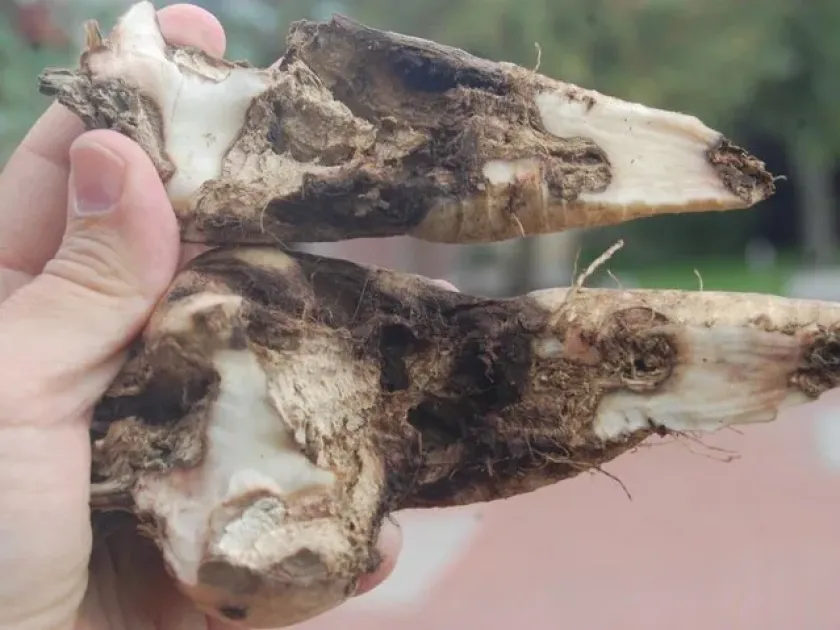
Description
How to identify
Binucleate Rhizoctonia refers to a group of fungi, predominantly within the Ceratobasidium genus, characterized by having two nuclei per cell in their vegetative hyphae.
Unlike the more aggressive multinucleate Rhizoctonia solani, these fungi vary in their pathogenicity, often serving as commensals or weak parasites on plant roots.
They are soil-borne fungi that reproduce mainly through vegetative mycelium and the formation of sclerotia, which allow them to persist in the environment for extended periods.
Taxonomically, they are identified by anastomosis grouping, which helps researchers distinguish between different strains and understand their host specificity.
These organisms are highly adaptable and can be found in diverse soil types across the globe, frequently associating with the rhizosphere of various plant species.
What it damages
The primary damage caused by these fungi involves root rot and damping-off, which are especially detrimental during the seedling establishment stage.
They can infect the roots of a wide range of hosts, leading to necrotic lesions that impair water and nutrient uptake, causing overall growth stunting.
In some cases, the infection can spread to the basal stem, creating collar rot, which compromises the structural integrity of the plant and may lead to lodging.
Crop yields are often reduced due to uneven stand density and the presence of sickly, underdeveloped plants within the field.
While often considered minor pathogens, in conducive environments, they can cause significant economic losses by creating entry points for secondary pathogens.
When it appears
Infection cycles typically begin during cool, moist conditions following sowing, when seedlings are most susceptible to soil-borne pathogens.
The pathogen remains dormant as sclerotia in the soil or on decomposing plant matter during dry or cold seasons until favorable conditions return.
High soil moisture is the primary driver for hyphal growth and infection, allowing the fungus to spread rapidly through the soil matrix.
Agricultural activities such as tillage can redistribute the pathogen within the field, creating new infection foci for the next planting season.
Environmental stress, such as extreme soil temperatures or poor drainage, can exacerbate the impact of the disease on crop development.
Signs of infestation
Symptoms often manifest as stunted growth and yellowing of foliage due to the inability of the damaged root system to support the plant.
Root systems show signs of decay, appearing brown or darkened, with reduced lateral root growth and, in severe cases, complete root system loss.
Damping-off of seedlings occurs when the fungus attacks the hypocotyl, causing it to collapse and turn brown at the soil surface level.
A fine, web-like mycelium may be visible under high humidity conditions, often appearing near the stem base or on the affected roots.
- Reduced germination and poor stand.
- Brown necrotic lesions on primary roots.
- Wilting during peak daylight hours.
- General chlorosis in young plants.
Control measures
Crop rotation is an essential strategy to reduce pathogen inoculum in the soil by alternating host and non-host crop species.
Effective seed treatment with systemic fungicides provides crucial protection during the early stages of plant development, significantly improving stand emergence.
Improving soil drainage and optimizing planting depth are vital agronomic practices that discourage fungal proliferation in the rhizosphere.
Biological control agents, particularly specific strains of Trichoderma, have proven effective in suppressing Rhizoctonia populations in the soil.
Balanced fertilization and weed control ensure that plants remain vigorous and less susceptible to the opportunistic infections typical of binucleate strains.
Causes diseases · 1
Discussion
No discussions yet — be the first.