
Description
Symptoms
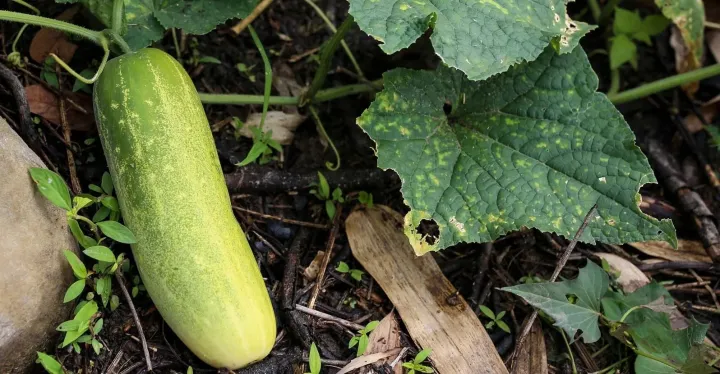
The hallmark sign of the infection is a mosaic pattern on the leaves, characterized by alternating patches of light green, yellow, and dark green tissue.
Infected leaves often exhibit severe deformation, becoming wrinkled, curled, or stunted in size, which impairs the plant's photosynthetic capacity.
Plants affected by CMV display significant growth retardation, shortened internodes, and a bushy, stunted appearance that prevents normal development.
Fruits produced by infected plants often show abnormalities such as bumps, mottling, and discoloration, which severely reduce their commercial market value.
In severe cases, the virus causes systemic necrosis and premature wilting, ultimately leading to the total collapse of the plant and death of the harvest.
Pathogen
Cucumber mosaic is caused by the Cucumber mosaic virus (CMV), a highly prevalent plant pathogen belonging to the Cucumovirus genus.
The virus consists of spherical particles containing single-stranded RNA and is known for having the broadest host range among all known plant viruses.
CMV survives in nature primarily within perennial weed hosts, which act as a reservoir for the virus during the winter months, allowing it to re-emerge in spring.
It affects a wide variety of plants, including celery, fodder beet, Carpathian bellflower, hemp, pepper, safflower, watermelon, Persian cyclamen, and many others.
Transmission occurs primarily through aphid vectors in a non-persistent manner, meaning the insects can pick up and transmit the virus quickly after feeding on an infected plant.
Conditions for development
The development and spread of Cucumber mosaic virus are strongly favored by warm temperatures and the presence of high populations of aphid vectors.
Fluctuating environmental conditions, such as significant day-to-night temperature changes, can stress plants and make them more susceptible to viral invasion.
Poor sanitation, specifically the presence of weeds surrounding the crop, provides an ideal environment for aphid breeding and serves as a continuous source of inoculum.
Physical injury to plant tissue during regular cultivation practices like pruning or harvesting facilitates the mechanical transmission of the virus.
Water stress and nutrient deficiencies weaken the plant's immune system, allowing the virus to replicate more efficiently and produce more severe symptoms.
Why it matters
Cucumber mosaic virus poses a major threat to global agriculture because there are no curative treatments available once a plant is infected.
The economic impact is primarily driven by massive yield losses, as infected plants fail to produce marketable fruits or suffer from total crop failure.
The marketability of the produce is severely compromised, as distorted and mottled fruits do not meet consumer standards and have a shortened shelf life.
Because the virus is easily spread, it can cause rapid outbreaks in field conditions, leading to the destruction of entire plantations in a single season.
In long-term plantings, the virus can lead to the cumulative decline of plant health, necessitating expensive removal and replacement of the crop.
Protection
Management must prioritize prevention, starting with the strict control of perennial weeds that serve as the overwintering reservoir for the virus.
Regular monitoring for and application of effective insecticides to control aphid populations is essential to break the cycle of virus transmission.
Growers should use only certified, virus-free seeds and transplants to prevent the introduction of the pathogen into new areas at the start of the season.
Implementing crop rotation and maintaining physical barriers or spatial separation from other susceptible crops significantly reduces the incidence of the disease.
- Thoroughly disinfecting tools to prevent cross-contamination.
- Rogueing and destroying infected plants immediately upon symptom detection.
- Prioritizing the use of genetically resistant or tolerant crop varieties.
In brief
24
Affects crops
Biology
Pathogens and affected parts
Pathogens
Affected plant parts
whole plant
Content graph
Affects crops · 24
Content graph
Connections · Cucumber mosaic
Most often together:
Marketplace
Products · 1
Community
Discussion
No discussions yet — be the first.