
Citrus canker
Xanthomonas citri
Description
Symptoms
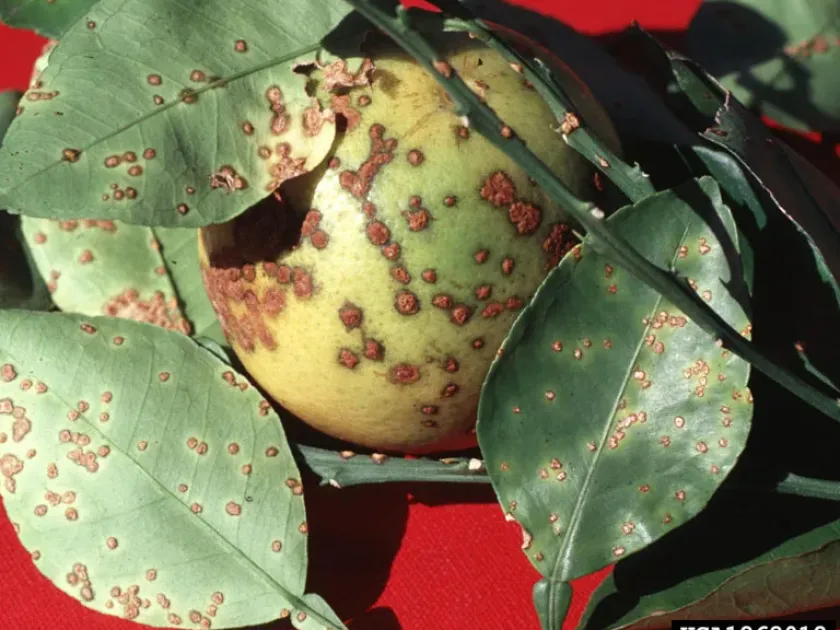
The characteristic symptoms of citrus canker are small, round lesions that initially appear as water-soaked spots. Over time, these spots enlarge, become raised and corky, and develop a distinct yellow halo of chlorotic tissue.
Infection can occur on leaves, stems, and fruits. On leaves, the lesions are visible on both sides of the lamina, leading to premature yellowing and heavy leaf drop, which weakens the overall tree health.
When twigs are infected, they develop raised, scabby lesions that can cause the bark to crack. Severe infections can girdle stems, leading to the death of branches and stunted tree growth.
Fruit symptoms are particularly damaging for commercial growers, as the raised, brown, corky lesions appear on the rind. This not only makes the fruit aesthetically unappealing but also significantly reduces its market value.
In advanced stages, lesions may coalesce, covering larger areas of the plant tissue. This extensive damage disrupts the plant's physiological functions and can lead to fruit drop and tree decline.
Pathogen
Citrus canker is caused by the bacterium Xanthomonas citri subsp. citri. It is a highly contagious bacterial disease that affects the foliage, twigs, and fruit of all types of citrus plants.
The pathogen is a gram-negative rod-shaped bacterium that thrives within the intercellular spaces of citrus tissues. It can persist in infected plant debris, soil, and lesions on dormant wood for extended periods.
Dissemination primarily occurs via wind-driven rain, which splashes the bacteria from infected lesions onto healthy plant surfaces. Furthermore, humans play a significant role in spreading the disease through contaminated tools, clothing, and the movement of infected nursery stock.
Once the bacteria land on a susceptible surface, they enter the plant through natural openings such as stomata, or through wounds created by insects, thorns, or mechanical damage.
This disease is considered a major quarantine pest globally. Due to its potential to devastate entire citrus industries, strict international regulations govern the trade and movement of citrus material to prevent its introduction into non-infected areas.
Conditions for development
Environmental conditions play a critical role in the development of citrus canker. The disease thrives in warm, humid climates, with temperatures typically ranging between +20°C and +30°C.
Rainy weather combined with high-velocity winds is the primary driver of rapid disease spread. Wind-blown rain carries the bacteria to healthy parts of the canopy, facilitating multiple secondary infection cycles.
Young, actively growing tissues are the most susceptible to infection. During these stages of development, the plants' natural barriers are less effective, and open stomata provide easy access for the bacteria.
Insect activity, particularly the citrus leafminer (Phyllocnistis citrella), significantly increases susceptibility. The damage caused by these insects creates entry points for the bacteria, allowing them to penetrate deeper into the plant tissue.
Poor orchard management practices, such as lack of pruning to allow air circulation or over-irrigation, create the humid microclimate required for the pathogen to flourish and spread throughout the grove.
Why it matters
The primary concern with citrus canker is that there is no chemical cure for an infected tree. Once a tree is diagnosed with the disease, it must often be removed and destroyed to protect surrounding trees.
Economic losses are severe, as the disease reduces fruit yield and renders the crop unmarketable. Furthermore, quarantine restrictions often prevent growers from exporting fruit from affected regions, causing massive trade losses.
The disease weakens the trees significantly, making them more vulnerable to secondary infections and environmental stress. Continued infection can lead to the death of the entire tree, resulting in total loss of investment.
The presence of citrus canker impacts the long-term viability of citrus production in a given area. It forces growers to shift toward more expensive and intensive disease management strategies, increasing operational costs.
Because the pathogen is easily transported, a single infected seedling can spark an outbreak that threatens an entire region's agricultural stability and food security.
Protection
Strict quarantine measures are the first line of defense. It is vital to avoid introducing citrus material from areas known to have citrus canker and to source nursery plants from certified disease-free suppliers.
Eradication is the standard management approach for infected trees. Infected plants must be cut down and burned to ensure that no bacteria remain to infect nearby healthy vegetation.
Preventive copper-based sprays, such as Bordeaux mixture or copper oxychloride, can be applied to protect healthy foliage during the growing season, particularly before weather conditions favorable for infection occur.
Rigorous sanitation of tools is mandatory. All pruning equipment must be disinfected with bleach solutions, quaternary ammonium compounds, or alcohol between trees to avoid mechanical transmission of the pathogen.
Integrated Pest Management (IPM) focusing on controlling the citrus leafminer and other pests helps reduce the number of wounds on the trees, thereby decreasing the likelihood of bacterial infection.
Discussion
No discussions yet — be the first.