
Infectious coryza
Haemophilus paragallinarum
Description
Symptoms
The clinical progression of the disease typically starts with nasal discharge, which ranges from clear, mucoid fluid to a thick, purulent, foul-smelling substance.
Affected birds exhibit characteristic facial swelling, often leading to severe edema of the wattles and the tissue around the eyes.
Conjunctivitis is a very common finding, resulting in swollen, closed eyelids and constant lacrimation, which prevents the bird from feeding properly.
Respiratory distress is evidenced by loud rales, gasping, and persistent sneezing as the bird attempts to clear its blocked nasal passages.
Lethargy, reduced appetite, and a dramatic drop in body weight are consistently observed as the systemic effects of the bacterial infection take hold.
Pathogen
Infectious coryza is an acute respiratory disease affecting poultry, caused by the bacterium Haemophilus paragallinarum.
The organism is a fastidious, Gram-negative, non-motile bacterium that specifically targets the nasal passages and sinuses of chickens.
It is characterized by low environmental resistance, meaning the bacteria cannot survive for long periods outside the host's body.
Because the pathogen is sensitive to heat, desiccation, and common disinfectants, infection is almost exclusively transmitted through direct contact or contaminated water sources.
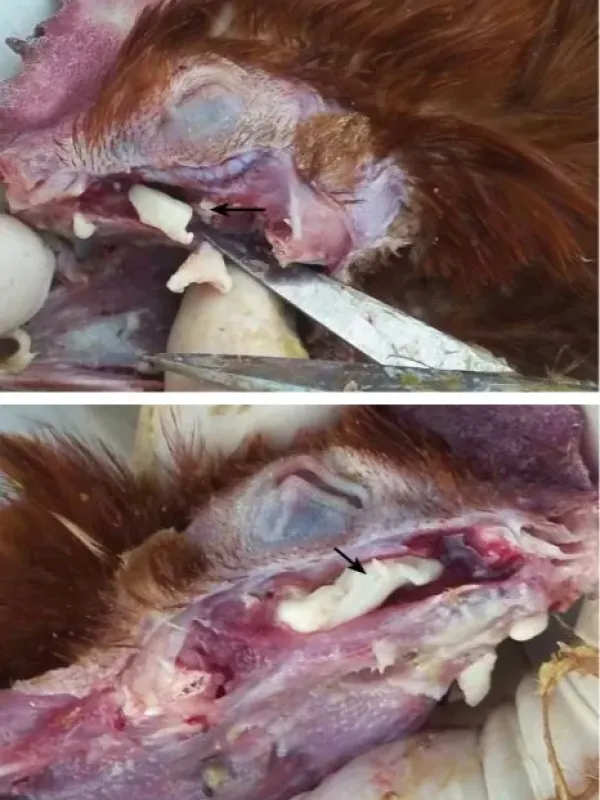
Laboratory diagnosis typically involves the isolation of the bacterium from infraorbital sinus exudates during the early clinical stages of the infection.
Conditions for development
The spread of Haemophilus paragallinarum is significantly enhanced in crowded poultry houses where ventilation is suboptimal.
High humidity levels and extreme temperature fluctuations increase the stress on the birds' respiratory systems, making them more susceptible to bacterial colonization.
The introduction of healthy-looking but asymptomatic carrier birds into a clean flock is a common factor triggering severe outbreaks within a farm.
Poor biosecurity practices, such as shared equipment between different age groups, contribute to the rapid transmission of the pathogen.
Nutritional deficiencies and concurrent parasitic or viral infections can act as catalysts that exacerbate the clinical severity of an infectious coryza outbreak.
Why it matters
The disease causes significant economic losses, primarily through a sharp decrease in egg production, which can drop by 10 to 40 percent.
Infection in young birds results in stunted growth and uneven development, leading to increased culling rates and poor overall flock uniformity.
Increased mortality can occur when the primary bacterial infection is compounded by secondary pathogens that thrive in the damaged respiratory tissues.
The cost of medical treatments and the labor involved in managing an outbreak add significant financial burden to commercial poultry operations.
The long-term impact includes the presence of chronic carriers, which necessitates rigorous sanitation and potential depopulation to regain a disease-free status.
Protection
Implementing an "all-in, all-out" management system is the most effective way to prevent the establishment and persistence of the bacterium.
Regular sanitation of water lines and equipment using appropriate disinfectants is critical, given the bacteria's sensitivity to chemical agents.
Vaccination programs are highly recommended in endemic areas to build herd immunity and reduce the impact of potential bacterial exposure.
In the event of an outbreak, veterinary-supervised treatment with antibiotics such as sulfonamides or fluoroquinolones may be used to reduce clinical symptoms.
Rigorous biosecurity protocols, including strict quarantine for new birds and controlled access to poultry houses, are essential to preventing the introduction of the pathogen.
Discussion
No discussions yet — be the first.