
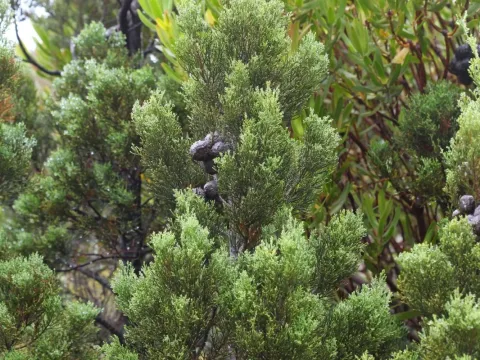
Widdringtonia dracomontana
Widdringtonia dracomontana
Widdringtonia dracomontana, commonly known as the Berg Cypress, is a resilient evergreen conifer belonging to the Cupressaceae family. It is native to the Drakensberg mountains in South Africa, thriving in high-altitude environments often characterized by rocky terrain.
What the section contains
Widdringtonia dracomontana
The tree exhibits slow growth and reaches heights suitable for both alpine landscape restoration and specialized arboriculture. Its foliage varies from needle-like in juvenile stages to scale-like leaves as it matures, showcasing the unique evolutionary adaptations of this species.
Cultivation requires well-drained soil, preferably with a slightly acidic profile. The species is adapted to cool, moist mountain air and requires stable environmental conditions to establish its root system during the initial years of growth.
Agrotechnical management focuses on avoiding waterlogged soils, which can be detrimental to the root health of the species. Proper site selection, ensuring exposure to natural sunlight and protection from extreme high-velocity winds, is essential for healthy sapling development.
The plant has been used historically for its durable wood, although modern agricultural interest is primarily focused on conservation biology and forest management. It serves as an important component in ecosystem services within its native mountainous range.
Wildfires pose a significant threat to the survival of Widdringtonia dracomontana, particularly in stands where invasive vegetation increases fuel loads near the trees.
Fungal pathogens affecting the root system, such as Phytophthora species, can devastate plantations if drainage management is neglected during the seedling production stage.
Insect pests including various types of borers and needle-feeding caterpillars can reduce the vigor of the trees, especially during periods of environmental stress.
Overgrazing by domestic livestock in protected areas prevents the successful regeneration of young trees, threatening the long-term viability of the population.
Integrated pest management and habitat protection are the primary strategies employed to mitigate these risks and ensure the continued growth of the species.