
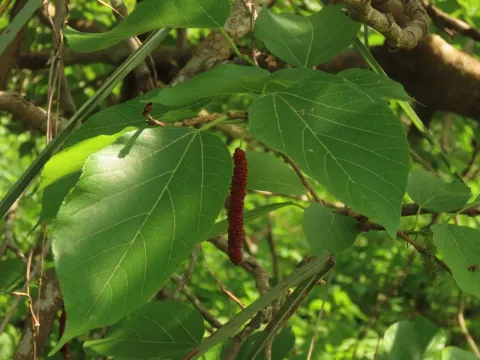
White mulberry
Morus alaisia
The white mulberry (Morus alba) is propagated either by seeds or by vegetative methods including grafting, budding, and hardwood or softwood cuttings. Seed sowing is typically performed in autumn or early spring after cold stratification.
What the section contains
White mulberry
Seeds should be sown at a shallow depth of approximately 1-2 centimeters in well-drained, fertile soil. Germination usually occurs within a few weeks, provided the soil remains moist and temperatures are favorable.
Vegetative propagation is preferred for commercial orchards to ensure uniformity and high fruit quality. Grafting onto hardy rootstocks is the most common technique used to preserve specific cultivar traits.
Softwood cuttings are taken during the growing season and treated with rooting hormones to improve survival rates. High humidity and indirect light are essential for rooting success during the initial weeks.
Young trees should be planted in their permanent location during the dormant season, ensuring that the planting pit provides sufficient space for initial root development and good anchorage.
Morus alba belongs to the Moraceae family and is a robust deciduous tree. It prefers full sun exposure to maximize fruit production and tree health, as shaded trees often display reduced growth and lower yields.
The species is highly adaptable to various soil types, including sandy, loamy, and slightly saline soils. However, it thrives best in deep, well-drained, fertile soil with a near-neutral pH level.
While white mulberry is moderately drought-tolerant, consistent irrigation during the fruit-ripening stage significantly improves both the size and sweetness of the berries, especially in arid climates.
The tree is winter-hardy and can withstand significant frost once established. However, young specimens benefit from protective measures against extreme cold and wind during their first few years of growth.
Proper spacing between trees is crucial to allow for adequate air circulation and to facilitate maintenance activities such as pruning and harvesting, preventing the spread of fungal diseases.
Fruit production usually begins within 3 to 5 years after planting for grafted trees. As the tree matures, its yield increases substantially, with mature trees producing significant harvests annually.
A single healthy, fully grown white mulberry tree can yield over 100 kilograms of fruit per season. Productivity depends heavily on proper site selection, pruning, and protection from extreme weather during blooming.
The harvest season typically lasts for several weeks. Because the fruits do not ripen all at once, multiple pickings are often required to collect the berries at their peak sugar content.
Besides the berries, the foliage of Morus alba is the primary food source for the silkworm (Bombyx mori), making the tree essential for the sericulture industry globally.
The wood of the mulberry tree is highly valued for its durability, fine grain, and attractive color. It is frequently utilized in the manufacture of high-end furniture, cabinets, and traditional musical instruments.
The fall webworm (Hyphantria cunea) is a significant pest that can defoliate entire trees. Monitoring for webbed branches and manual removal of egg masses is a primary control strategy.
Scale insects and spider mites can also affect mulberry trees, particularly in hot and dry weather conditions, by sucking plant sap and reducing the overall vigor of the tree.
Powdery mildew is the most common fungal disease, appearing as a white powdery coating on leaves. It is often encouraged by high humidity, poor air circulation, and dense canopy growth.
Bacterial blight can cause spotting and death of young shoots. Preventing these issues involves maintaining good orchard hygiene, specifically by removing and destroying infected plant debris promptly.
- Regular pruning to improve air movement through the canopy.
- Applying dormant oil sprays if scale insect populations are identified.
- Removing fallen leaves to break the disease life cycle during winter.
Harvesting white mulberry fruits is a delicate task due to the fragile nature of the berries. They bruise easily and ferment quickly once removed from the branch, necessitating careful handling.
For fresh market sales, hand-picking is required. Fruits are collected when they reach their full color and become soft, often requiring several passes over the same tree during the season.
In large-scale operations, mechanical harvesting via tree shakers and ground nets is used. This method is effective but requires immediate processing of the collected berries to ensure quality.
Post-harvest life is very short, often lasting only 24 to 48 hours at room temperature. Cold storage is mandatory to maintain fruit integrity if immediate processing is not possible.
Common end-uses for the harvested berries include jams, syrups, juices, and drying. These processed products maintain the nutritional value of the fruit and are popular in many international cuisines.