
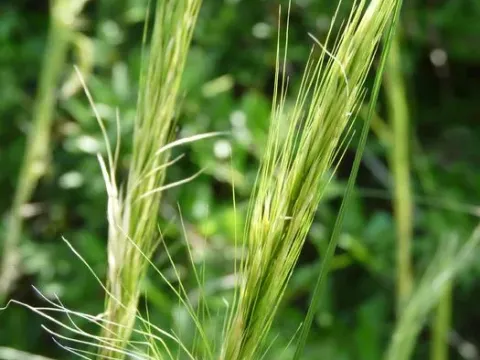
Robust needlegrass
Stipa robusta
Robust needlegrass (Stipa robusta) is a perennial grass species belonging to the Poaceae family. Native to the mountainous regions of Mexico and the southwestern United States, this grass is well-adapted to high-altitude environments and variable weather conditions typical of upland ecosystems.
What the section contains
Robust needlegrass
This species is characterized by a vigorous, deep root system that facilitates effective nutrient uptake and soil stabilization. In an agricultural context, seeds are typically sown in early spring once soil temperatures reach approximately 10–12 degrees Celsius, providing the necessary thermal conditions for germination.
Sowing depth is a critical factor; seeds should be placed at a depth of 1–2 centimeters to ensure protection while allowing for successful emergence. Adequate seed-to-soil contact is essential, and using a drill seeder or roller ensures uniform distribution and better establishment.
Young seedlings are sensitive to competition from invasive weeds. Therefore, field preparation must include mechanical or chemical weeding to minimize pressure from competing species during the sensitive early developmental stages of the robust needlegrass.
Optimal spacing between rows is recommended to promote tillering and ensure that the grass develops a dense turf. This density not only improves the overall yield of the forage but also helps prevent soil erosion by providing continuous ground cover.
Robust needlegrass is highly valued for its drought tolerance and ecological plasticity. It effectively survives periods of low rainfall by modulating its growth rate and utilizing moisture stored in deeper soil layers, making it a reliable option for arid and semi-arid regions.
The species thrives in well-drained loamy or sandy soils with a neutral pH. It is sensitive to waterlogging, as excessive soil moisture can lead to root system degradation and favor the growth of pathogenic fungi, which can be detrimental to the longevity of the stand.
The ideal temperature range for vegetative development lies between 18 and 25 degrees Celsius. Robust needlegrass exhibits notable resilience to daily temperature fluctuations, reflecting its evolutionary history in high-altitude environments where conditions can change rapidly.
Full sun exposure is a requirement for optimal development. Shaded conditions lead to weak, leggy stems that are prone to lodging, which ultimately reduces the quality of the harvested biomass and makes subsequent agricultural operations more difficult.
Maintaining soil fertility through periodic fertilization, especially with phosphorus and potassium, helps strengthen the grass structure. Proper nutrient management ensures that the crop maintains high productivity levels throughout its multi-year lifespan in the pasture.
The primary agricultural utility of robust needlegrass lies in its role as a forage crop for livestock grazing or hay production. Yield is directly influenced by proper management practices and the timing of harvests to capture the crop during its peak nutritional phase.
Maximum biomass production is typically achieved by the second or third year following establishment. Under intensive management, including strategic nitrogen fertilization, the grass can produce multiple cuts per season without depleting the soil’s mineral reserves.
The nutritional profile of the grass is best when harvested during the early heading stage. During this period, the levels of crude protein and digestible fiber are at their highest, making it an excellent feed source for cattle and sheep during the peak growing season.
Delayed harvesting leads to an increase in lignin content, which significantly reduces the palatability and digestibility of the forage for livestock. Farmers are encouraged to monitor the physiological maturity of the grass to ensure harvest occurs at the optimal window.
The crop can also serve as a foundational component in restoration mixes for degraded rangelands. Its perennial nature and aggressive root growth allow it to compete effectively while improving the overall health and structure of the soil over time.
Fungal diseases, particularly rust and powdery mildew, represent significant threats to robust needlegrass, especially in humid or poorly ventilated conditions. These pathogens can stunt growth and reduce the biomass yield by causing early leaf senescence.
Pests such as grass bugs and aphids are known to feed on the sap of young plants, causing localized damage. Infestations can weaken the stand, making it more susceptible to secondary infections or environmental stress during critical growth periods.
Integrated pest management (IPM) is the preferred approach for controlling these threats. This includes monitoring populations and employing biological controls whenever possible to minimize the impact of chemical pesticides on the local environment and beneficial insects.
Small rodents can damage the rhizomes and root systems of the grass, especially in winter when food sources are scarce. Protecting fields from excessive rodent burrowing is crucial for maintaining the density and integrity of the needlegrass stand over time.
Consistent monitoring and early detection of disease or pest hotspots allow farmers to implement targeted interventions. This proactive strategy is essential for protecting the economic return of the crop and ensuring the long-term success of the agricultural operation.
The harvest phase is essential for balancing biomass quantity with nutritional quality. The ideal window for cutting is at the beginning of the heading stage before seed development, which allows for the collection of a nutrient-dense and palatable feed product.
Mechanical harvesting should utilize modern windrowers or mowers equipped with conditioning features. Proper conditioning helps reduce moisture content more rapidly, preserving the essential nutrients and preventing the deterioration that occurs when grass is left to dry too slowly.
When harvesting for seeds, equipment settings must be calibrated with care to ensure the delicate seed structures are not crushed. A multi-stage cleaning process is often required post-harvest to separate seeds from impurities like awns and dust.
Post-harvest management is vital for the recovery of the plants. Avoiding heavy grazing immediately after the last cut of the season allows the roots to store energy for winter survival and promotes a faster regrowth cycle in the following spring.
Stored hay should be kept in dry, well-ventilated barns to prevent mold growth and moisture absorption. Effective storage protocols ensure that the feed maintains its quality, providing a reliable resource for livestock throughout the winter months.