
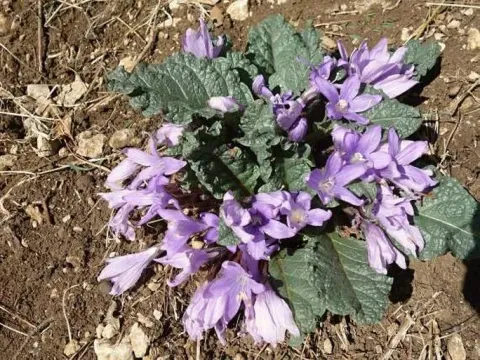
River pennycress
Thlaspi rivale
River pennycress (Thlaspi rivale), a member of the Brassicaceae family, is a niche crop with specific requirements for its initial establishment. Seeding should occur in early spring when the soil temperature consistently reaches 5–7 degrees Celsius.
What the section contains
River pennycress
The seeds are small and require a finely prepared, moist seedbed to ensure successful germination. Shallow planting at a depth of 1–2 centimeters is critical for ensuring that the seedlings can emerge effectively.
Broadcasting or row seeding can be utilized, but spacing of at least 30 centimeters between rows is recommended to facilitate proper maintenance and mechanical weeding throughout the growing season.
Moisture availability during the first two weeks post-sowing is the most critical factor in achieving high plant density. Irrigation may be necessary if spring rainfall is insufficient.
Avoiding early season competition from weeds is essential. Seedling growth is initially slow, making it vulnerable to invasive grasses that must be managed early.
True to its scientific name, river pennycress thrives in moist environments. It performs best in soils that retain moisture but do not suffer from standing water or poor drainage.
The crop prefers fertile, loamy soils with a neutral pH level. It is highly adaptable but shows reduced biomass production in overly sandy or highly acidic soil conditions.
River pennycress requires full solar exposure to maximize flowering and seed production. While it can survive partial shade, its development is significantly stunted.
Temperature management is straightforward, as the plant is hardy and withstands the fluctuating temperatures typical of early spring climates without significant injury.
Nutrient requirements are standard for cruciferous crops, necessitating moderate levels of nitrogen during the vegetative phase and phosphorus to support reproductive development.
Crucifer flea beetles are the primary pests that jeopardize young stands. Early infestation can lead to complete stand loss if not monitored and treated immediately.
Fungal diseases, specifically white rust and various leaf spot pathogens, can emerge in high-humidity conditions, necessitating good field hygiene and airflow.
Pest pressure can be mitigated through crop rotation, avoiding planting river pennycress on fields that recently hosted other mustard family members like rapeseed.
Insects like the rapeseed beetle may impact reproductive stages by damaging the floral buds, leading to a significant reduction in total harvest yield.
Biological controls and targeted use of crop-safe insecticides are the main tools for maintaining healthy plant populations during the mid-season growth cycle.
Harvest timing is critical, as river pennycress is susceptible to pod shattering when the seeds reach full maturity. Timing the harvest just before the pods turn brittle is essential.
Direct combining is the standard method, requiring the machinery to be calibrated for small seeds to minimize losses and ensure a clean harvest product.
Post-harvest processing involves immediate drying to reduce seed moisture content to below 12% to prevent mold growth during short-term storage.
The yield potential is highly dependent on effective pollination and the avoidance of late-season rainfall that could cause secondary plant regrowth.
Proper cleaning and grading of the harvested seeds are necessary to remove chaff and organic debris, ensuring the quality required for industrial or agricultural end-use.