
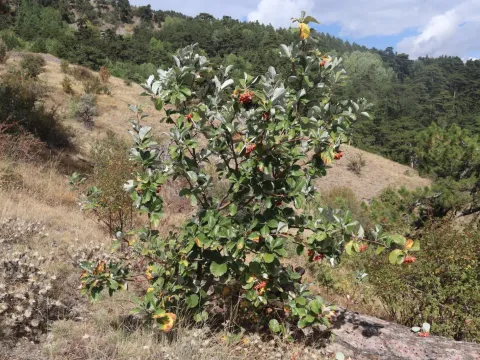
Crimean rowan
Sorbus turcica
The Crimean rowan (Sorbus turcica) is a rare species within the Rosaceae family, native to the mountainous regions of Crimea. Propagation is primarily achieved through seeds, as vegetative propagation such as cutting is often difficult and produces low rooting percentages. Seeds require cold stratification for 3 to 4 months to break dormancy and ensure high germination rates.
What the section contains
Crimean rowan
The ideal time for sowing seeds outdoors is late autumn, allowing for natural winter stratification. If sowing in the spring, it should be done as soon as the soil can be worked, following any necessary artificial stratification. Seeds should be planted at a shallow depth of approximately 2-3 centimeters in a well-prepared seedbed.
When starting seedlings, use a light, well-draining soil mix with a neutral or slightly acidic pH. Protecting young seedlings from direct, scorching sunlight is essential during the first season to prevent desiccation. Seedlings are typically kept in nursery conditions for 2 to 3 years before being transplanted to their final location, ensuring they have developed a robust root system.
Initial growth of the Crimean rowan is relatively slow, necessitating diligent weed control and regular soil aeration around the base of the plant. Consistent watering is vital, especially during the first few years and in periods of drought. Fertilizer application, starting from the second year, helps support steady vegetative growth and tree health.
Applying organic mulch around the root zone helps conserve soil moisture and suppresses weed growth, which is particularly beneficial in the early stages of development. Proper horticultural practices at this stage ensure the tree will become established and resilient. With careful attention, the Crimean rowan can thrive in various garden settings.
The Crimean rowan is a light-demanding species that thrives in open, sunny environments. Inadequate sunlight results in sparse crown development and a significant drop in fruit production. The tree is generally hardy and capable of withstanding the temperature fluctuations typical of its natural mountainous habitat.
The ideal soil for this species is well-drained and nutrient-rich, such as sandy loam or light clay loam. It does not tolerate waterlogged conditions, which can lead to root rot; therefore, providing good drainage is paramount if planting in heavy soils. A soil pH between 6.0 and 7.5 is considered optimal for growth.
Regular irrigation is required during dry summer months to ensure fruit development and overall tree vigor. In addition to water, maintaining soil structure through occasional cultivation or mulching allows oxygen to reach the roots efficiently. If the soil pH deviates significantly from the target range, corrective measures like liming or organic amendment are advised.
While the tree is cold-hardy, younger specimens should be protected from harsh, drying winds. Planting multiple trees close to each other can improve cross-pollination, leading to higher fruit yields. Nutrient supplementation with balanced fertilizers during the early spring is recommended to stimulate new growth.
Even in urban environments, the Crimean rowan can adapt well, provided that its canopy is occasionally rinsed to remove accumulated dust. By meeting these specific requirements, gardeners can cultivate a healthy, long-lasting, and highly ornamental tree. Attention to detail in the planting phase pays off in the longevity and aesthetic value of the tree.
The yield of the Crimean rowan depends on factors such as the maturity of the tree, light exposure, and the overall management of the garden. Generally, fruit production begins 5 to 7 years after planting on a permanent site. Once established, the tree will show a consistent increase in production as its crown expands and matures.
The fruits possess a pleasant, unique flavor and are widely recognized for their nutritional value. Harvesting typically occurs in late summer or early autumn when the berries reach their peak color. Collecting the fruit during dry weather is crucial for post-harvest storage quality, as damp fruits are highly susceptible to fungal spoilage.
Pruning is essential for maintaining high productivity. By removing dead wood or crowded branches, sunlight penetration is improved, which encourages the development of fruit-bearing spurs throughout the inner canopy. Regular pruning also prevents structural damage that could be caused by heavy fruit loads.
Post-harvest storage should be in a cool, well-ventilated space to prevent moisture loss. The berries are high in vitamins and pectins, making them excellent candidates for jams, jellies, juices, or medicinal tinctures. Utilizing modern storage techniques can extend the shelf life of the berries for several weeks.
A mature tree provides a stable yield annually if irrigation and nutrient requirements are met. Balanced care helps prevent biennial bearing and ensures consistent production. The Crimean rowan serves as both a beautiful ornamental feature and a valuable fruit-producing tree for the home orchard.
The Crimean rowan can be affected by various pests and fungal diseases common to the Rosaceae family. The rowan moth is a particularly significant pest whose larvae can damage the developing fruit, leading to substantial yield losses. Regular monitoring of the foliage and fruit clusters allows for early intervention and effective pest control.
Scab, a common fungal disease, appears as dark spots on leaves and fruit, reducing both the quality and aesthetic appeal of the tree. Fungicide applications during the pre-blossom and post-blossom periods are the standard preventative measures. Removing fallen leaves in autumn is also critical to eliminate overwintering spores.
Aphids and leafhoppers often target tender young shoots, causing curling and stress. If left unmanaged, these infestations can weaken the tree significantly. Utilizing environmentally friendly insecticidal soaps or systemic pesticides at the first sign of an outbreak can effectively mitigate the damage.
Powdery mildew may occur during periods of high humidity and warm nights, manifesting as a white powdery coating on the leaves that inhibits photosynthesis. Ensuring optimal air circulation through strategic pruning is the most effective way to prevent this infection. A healthy, well-pruned tree is naturally more resistant to such ailments.
Boring insects can pose a threat, particularly to trees already weakened by other stressors. Maintaining tree vigor through proper fertilization and watering is the primary defense strategy. If trunks show signs of infestation, mechanical cleaning and specialized treatments may be necessary to save the tree.