
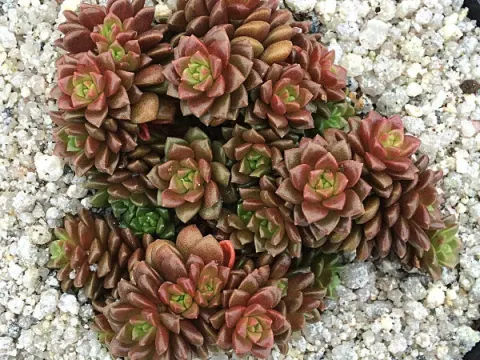
Cremnosedum
Cremnosedum
Cremnosedum is an intergeneric hybrid resulting from crossing plants of the genera Cremnophila and Sedum, belonging to the Crassulaceae family. These plants are succulent perennials, valued for their fleshy leaves capable of storing water for long periods of drought.
What the section contains
Cremnosedum
Cultivation is primarily focused on their ornamental value as house plants or container succulents. They are popular for their aesthetic rosette forms and the relative ease of maintenance in home conditions or greenhouses where they can thrive for many years.
Requirements for soil involve a highly porous, gritty mix that provides rapid drainage. A standard succulent substrate mixed with pumice, perlite, or coarse sand is essential to prevent root rot and ensure that the root system remains well-aerated at all times.
Lighting needs are high; these plants require bright, indirect light to maintain their compact shape. Inadequate light results in etiolation, where the plant becomes leggy, loses its color, and its leaves become thin and fragile, significantly decreasing its ornamental appeal.
Watering should be managed through the "soak and dry" method, where the soil is allowed to dry out completely between sessions. During the winter, the plant enters a semi-dormancy period, and water intake should be significantly reduced to mimic its natural environment.
The primary threats to Cremnosedum include root and crown rot, typically caused by excessive irrigation or poor drainage conditions. These fungal pathogens can destroy the plant's vascular system if the soil remains wet for extended periods, necessitating careful soil management.
Mealybugs are common pests that lodge in the crevices of the succulent leaves and roots. They feed on plant sap and can severely weaken the structure, often leaving behind a waxy residue that serves as a medium for secondary fungal growth.
Spider mites are another frequent issue, especially in dry environments. They are microscopic pests that cause leaf yellowing and stippling; regular inspection of the underside of the leaves is crucial to identify an infestation in its early stages.
Scale insects can occasionally infest the stems, creating hardened brown bumps that are difficult to remove. Mechanical removal using alcohol-soaked swabs or systemic insecticides is often required to eradicate these persistent pests from the succulent tissue.
Preventive maintenance, including the removal of dead lower leaves and ensuring good air circulation around the plants, is the best strategy to keep Cremnosedum healthy and resistant to common pests and diseases throughout the growing season.