
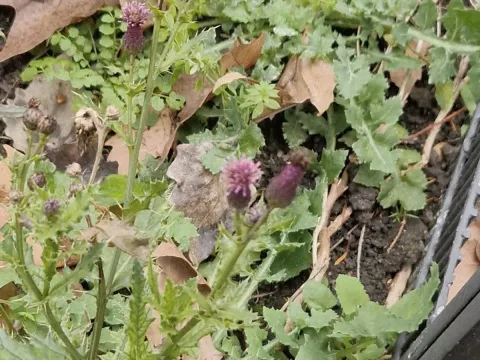
Creeping thistle
Breea setosa
Creeping thistle (Breea setosa) is a perennial herbaceous plant belonging to the Asteraceae family. It is widely recognized by agronomists as a persistent weed that significantly impacts crop yields in agricultural systems.
What the section contains
Creeping thistle
The plant is defined by its extensive and deep-seated rhizome system, which allows it to thrive in diverse environmental conditions. This adaptation makes it difficult to eradicate once it establishes itself in a field.
It prefers fertile and moist soils but shows remarkable resilience across various landscapes. The rapid vegetative spread via root segments makes it a primary concern during tillage operations, as fragmentation can lead to new plant development.
Effective management requires strict adherence to crop rotation cycles. Deep plowing and timely fallow field treatments are necessary to deplete the carbohydrate reserves stored within the rhizomes, gradually weakening the plant population.
Morphologically, the plant possesses sharp spines, which act as a defense mechanism against herbivores. In competition with crops, it excels at utilizing light, space, and soil nutrients, thereby reducing the overall productivity of the cultivated fields.
Breea setosa serves as a host for various agricultural pests and diseases. It often harbors pathogens such as rust fungi, which may subsequently spread to essential cereal crops, causing economic losses.
Insects like aphids and specific weevils frequently infest the plant during the vegetative season. These pests can persist on the weed and then migrate to cash crops, creating additional pressure on crop protection programs.
Chemical control focuses on the application of systemic herbicides. The optimal time for treatment is the rosette stage, which ensures the herbicide is translocated effectively through the plant structure down to the root system.
Mechanical destruction of roots, if performed improperly, can stimulate further growth rather than eradication. Therefore, it is essential to combine mechanical weeding with preventive agricultural practices.
Integrated weed management remains the most effective strategy for controlling this species. By rotating crops and employing precise herbicide applications, farmers can significantly lower the density of this persistent weed in the field.