
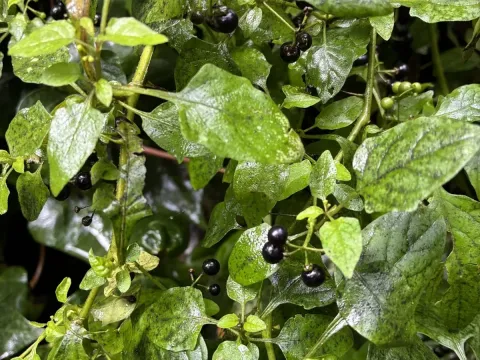
Eastern black nightshade
Solanum ptychanthum
Solanum ptychanthum, commonly known as Eastern black nightshade, is an annual herbaceous plant belonging to the Solanaceae family.
What the section contains
Eastern black nightshade
The plant reproduces through prolific seed production, with germination typically occurring in late spring as soil temperatures rise above 12°C.
Seeds exhibit a high degree of dormancy, allowing them to remain viable in the soil seed bank for several years, which complicates long-term weed control.
Early-season seedling emergence often coincides with the planting dates of major row crops, requiring vigilant monitoring and early intervention.
The growth cycle is characterized by rapid vegetative expansion, which allows the plant to outcompete crops for nitrogen and water resources.
This species thrives in full sun conditions but maintains moderate growth even in shaded environments provided by dense crop canopies.
It prefers well-drained, fertile soils rich in organic matter, though it is highly adaptable to a variety of soil textures including clay and loam.
Optimal growth occurs during warm seasons with adequate moisture, as the plant is sensitive to prolonged droughts that significantly inhibit biomass.
Frost sensitivity is a critical factor for the plant; temperatures below freezing result in immediate mortality of the entire aerial plant structure.
The plant shows a strong affinity for disturbed soil, often colonizing fields immediately after primary tillage or harvest operations have been completed.
Eastern black nightshade serves as a significant host for numerous pests and pathogens that affect commercially grown potatoes and tomatoes.
Diseases such as late blight, early blight, and various viral infections frequently spread from wild nightshade populations to neighboring crops.
Insect pests, most notably the Colorado potato beetle, rely on the plant as a secondary host, sustaining populations even when crop rotation is practiced.
Management strategies require a combination of chemical control using systemic herbicides and mechanical cultivation to prevent seed set.
Failure to manage nightshade populations leads to severe yield losses due to direct crop competition and the high incidence of transmitted plant diseases.