
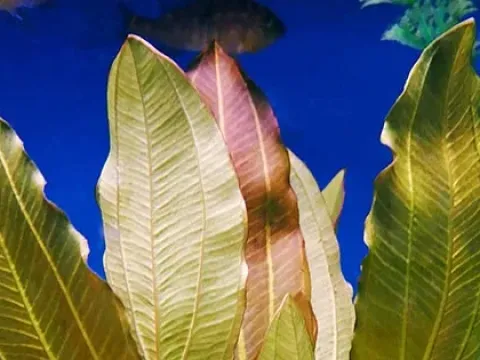
Echinodorus osiris
Echinodorus osiris
Echinodorus osiris, a member of the Alismataceae family, is a highly regarded aquatic plant native to the tropical wetlands of South America. It is widely cultivated for its large, elegant foliage and adaptability.
What the section contains
Echinodorus osiris
The plant features a sturdy root system and a rosette of lanceolate leaves. In optimal conditions, it displays a distinct reddish-brown tint, which makes it a preferred specimen for centerpiece decoration in aquaria.
Cultivation requires a nutrient-rich substrate, as the plant draws most of its resources through its roots. It thrives in tropical water temperatures, ideally maintained between 22 and 26 degrees Celsius.
Adequate lighting is essential for maintaining the vibrant coloration of the leaves. High-intensity light promotes faster growth and richer color, while low light can result in smaller leaves and a paler green appearance.
Water chemistry should be kept stable with neutral to slightly acidic pH levels. Regular water circulation ensures that nutrients reach the root zones and prevents the accumulation of waste around the plant base.
Nutrient deficiency is the most common threat to the health of Echinodorus osiris, particularly the lack of iron, which manifests as chlorosis, causing the leaves to lose their color and growth to stunt.
Pest issues include damage from aquatic snails or fish, which can nibble on the leaves. Such physical damage weakens the plant and can lead to secondary fungal or bacterial infections in the damaged areas.
Algal growth, such as hair algae, often colonizes the leaves if there is an imbalance in nutrient supply or lighting. This competition for light and nutrients can severely hinder the plant's development.
Root rot remains a primary concern in poorly maintained substrates. If the substrate becomes too compact or anaerobic, the roots cannot breathe, leading to rapid decay of the entire plant structure.
Excessive water hardness may also lead to physiological stress in the plant, making it less resistant to common diseases. Maintaining proper filtration and tank maintenance is critical to preventing these threats.