
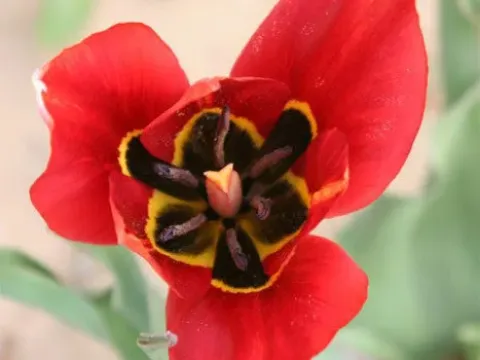
Early tulip
Tulipa praecox
The planting of Early Tulip bulbs occurs during the autumn season, typically when soil temperatures at a depth of 10-15 cm drop to between +7 and +10 degrees Celsius. This timing is essential for root establishment before the onset of hard winter frosts.
What the section contains
Early tulip
Bulbs should be planted at a depth of approximately three times their own height in sandy soils, or two times their height in heavier clay soils. Proper planting depth acts as an insulating barrier against temperature fluctuations and supports the development of robust flower stems.
Maintaining a distance of 10 to 15 centimeters between bulbs is recommended to ensure adequate nutrient access and air circulation. Avoiding overcrowding significantly reduces the risk of fungal infections caused by high humidity around the foliage.
In regions with harsh winters and low snow cover, applying a layer of mulch—such as straw, peat, or dry leaves—is advisable. This layer protects the bulbs from freezing and helps maintain a stable moisture level throughout the dormant winter period.
Selecting an appropriate planting site involves choosing well-drained, sunny locations protected from strong winds. Avoiding low-lying areas that collect water during spring thaws is critical to preventing bulb rot and ensuring healthy growth come springtime.
The Early Tulip (Tulipa praecox) belongs to the Liliaceae family and thrives in fertile, well-draining soils with a neutral to slightly alkaline pH. Light, friable soil structures are ideal for allowing the bulbs to expand and develop healthy root systems.
Effective drainage is perhaps the most important requirement for successful cultivation. If the soil is heavy or prone to waterlogging, it is essential to incorporate coarse sand or gravel into the planting bed to ensure water moves away from the bulb base efficiently.
Regular watering is required during the active growth period, particularly as the tulips begin to form flower buds. However, moisture levels must be balanced; once the flowering period concludes, water application should be reduced to encourage the bulbs to enter dormancy.
Nutritional management involves a planned fertilization schedule: a nitrogen-rich feed in early spring to support foliage development, followed by potassium and phosphorus-heavy fertilizers during the bud-forming stage to promote healthy bulb storage and future flowering.
Weed control and soil aeration are vital maintenance tasks. Careful hoeing around the plants keeps the soil oxygenated, while the removal of weeds prevents competition for resources and helps keep the surrounding environment clean and less prone to pests.
Breaking virus (tulip mosaic virus) is a significant threat, characterized by unusual streaks and mottling on the petals. Because this virus is transmitted by aphids and manual contact, infected plants must be carefully removed and disposed of to protect the rest of the crop.
Fungal diseases like Fusarium wilt and grey mold (Botrytis) often appear in poorly ventilated environments or wet soil. Treating bulbs with a suitable fungicide before planting is a common and highly effective preventative measure used by professional growers.
Pests, such as bulb mites and wireworms, can cause severe damage by feeding on the bulb tissue and roots. Implementing a sound crop rotation strategy and using targeted insecticide treatments when necessary can help minimize these populations and protect the crop's health.
Aphids are both a direct pest and a vector for various viral diseases. Their presence should be managed quickly using soft soaps or systemic insecticides to keep the plant canopy healthy and prevent the spread of infections to neighboring plants.
Rodents such as mice and voles can destroy large numbers of bulbs during the winter months. Using wire-mesh baskets for individual bulb clusters or applying garlic-based repellents can provide an effective defense against these persistent garden threats.
Harvesting should be performed only after the foliage has turned yellow and begun to wither. Harvesting too early prevents the bulb from completing its nutrient storage cycle, which leads to weak flowering in the following season and smaller bulb sizes.
After excavation, the bulbs must be carefully cleaned of soil and old roots before being cured. Drying should take place in a shaded, well-ventilated area for several weeks, as direct sunlight can damage the protective bulb skin and cause dehydration.
Once dried, bulbs should be sorted by size and checked for any signs of mechanical injury or decay. Any damaged material should be discarded immediately to prevent the spread of pathogens to healthy stock during the storage period.
Bulbs are stored in a cool, dry, and airy environment at temperatures around +15 to +18 degrees Celsius. Proper airflow is crucial during storage to prevent the development of mold and to ensure the bulbs remain in peak condition until the next planting season.
Periodic inspection of the stored bulbs allows for early detection of issues, ensuring that the highest quality material is available for planting. This methodical approach to harvesting and storage is fundamental to achieving high-performance displays of Early Tulips year after year.