
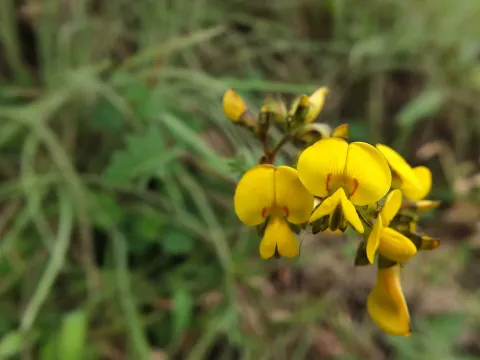
Smithia blanda
Smithia blanda
Smithia blanda is a herbaceous perennial plant belonging to the Fabaceae family. Native to tropical regions of Asia, specifically in India and Southeast Asia, it is well-regarded for its adaptability to high-moisture environments and diverse tropical habitats.
What the section contains
Smithia blanda
The plant thrives in moist soil conditions, frequently appearing along water bodies, in wetlands, or on humid slopes. Its ability to tolerate wet feet makes it a valuable candidate for regions prone to seasonal flooding where other crops might fail.
To achieve optimal biomass production, the plant requires soils that are well-structured and moderately acidic to neutral. As a legume, it contributes significantly to soil fertility by fixing atmospheric nitrogen, making it a sustainable choice for crop rotation systems.
Climatic requirements are strictly tropical, as Smithia blanda cannot survive frost or prolonged cold snaps. Consistent warm temperatures throughout the growing season are essential for the plant to reach its full development potential.
Agronomically, it is cultivated primarily for soil cover, nitrogen enrichment, and forage purposes. Its dense growth habit helps in suppressing weed proliferation and protecting the topsoil from erosion in tropical agricultural landscapes.
The primary threats to Smithia blanda plantations include fungal infections, specifically root rot, which typically occurs in waterlogged soils with poor drainage. Proper site selection and drainage management are critical for disease prevention.
Insect pests, including various beetle species and lepidopteran larvae, may feed on foliage, potentially impacting the overall productivity of the crop if infestations are not detected and managed early.
Competition from aggressive weed species is a significant challenge during the early seedling stages. Regular mechanical weeding is recommended to ensure that the young plants receive sufficient resources for establishment.
Bacterial wilt or soft rot can occasionally affect stands, especially during periods of high humidity and heat, necessitating careful monitoring and adherence to recommended plant spacing to ensure airflow.
Integrating biological control methods alongside systematic monitoring can help farmers maintain healthy stands and maximize the benefits of this nitrogen-fixing crop while keeping economic risks to a minimum.