
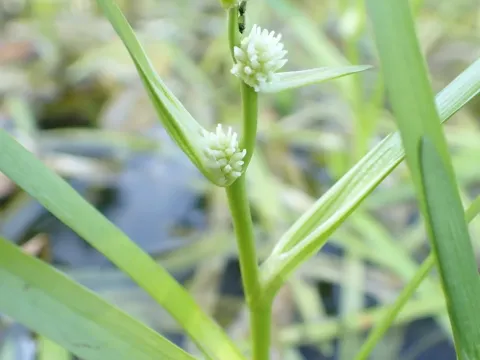
Small bur-reed
Sparganium natans
Small bur-reed (Sparganium natans) is a member of the Typha family. It is a perennial aquatic herb naturally found in shallow, slow-moving waters across the Northern Hemisphere. It thrives in temperate climates, establishing colonies in nutrient-rich silt deposits.
What the section contains
Small bur-reed
The plant requires stable water levels to maintain physiological health. It is particularly well-suited for wetlands and shallow pond edges where the water temperature remains consistent during the growing season. Excessive fluctuations in depth can stress the root system.
Regarding soil and water quality, Sparganium natans prefers neutral to slightly acidic pH environments. High concentrations of nitrates and phosphates in the water are efficiently absorbed by the plant, which contributes to the purification of local ecosystems.
The botanical structure is defined by its thin, floating leaves and distinct globose flower heads. The rhizome system is robust, allowing the plant to propagate laterally and cover significant surface areas within favorable wetland zones.
In agricultural practice, this crop serves as a natural tool for water management in irrigation systems. By acting as a biological filter, it mitigates the runoff impact from adjacent crop fields, enhancing the overall quality of water utilized for agricultural irrigation.
Common diseases affecting Sparganium natans include leaf spot fungi, which often manifest in stagnant, warm water conditions. These infections can significantly reduce the photosynthetic capacity of the plants, leading to weakened growth.
Pests, particularly aquatic caterpillars and certain leaf beetles, are known to feed on the foliage. While these insects are part of the ecosystem, large outbreaks can severely defoliate the plants, especially during the flowering stage.
Water pollution, particularly from heavy metals or chemical runoff, poses a major threat to the survival of small bur-reed colonies. The plant is highly sensitive to toxins, which can lead to metabolic failure and plant senescence.
Competition from invasive species like duckweed or aggressive algae can deplete sunlight access for young bur-reed plants. Effective management involves regular vegetation surveys and manual removal of competing biomass to ensure crop viability.
Sustainable maintenance includes monitoring for fungal outbreaks and utilizing targeted biological controls. Maintaining a healthy balance of dissolved oxygen in the water is critical to preventing the spread of diseases within the dense plant populations.