
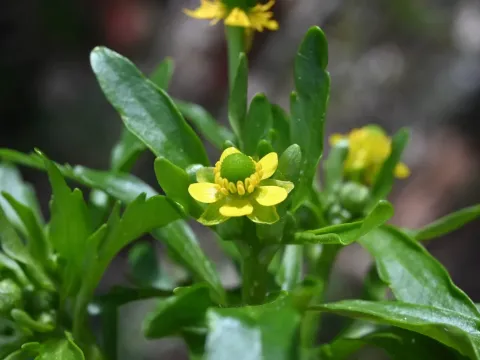
Desert buttercup
Ranunculus eremogenes
Desert buttercup (Ranunculus eremogenes) is a herbaceous perennial belonging to the Ranunculaceae family. Despite its common name, it is a hygrophilous plant primarily associated with wetland habitats within arid regions.
What the section contains
Desert buttercup
Its natural range encompasses parts of Central Asia and North America. The species thrives in temporary wetlands, drainage basins, and saline soils where soil moisture levels are relatively stable throughout the growing season.
The crop requires consistent moisture availability for optimal development. While it exhibits tolerance to occasional dry spells, prolonged drought will significantly inhibit its growth and flowering cycle.
Full sun exposure is essential for the healthy physiological development of this plant. It is intolerant of shade, which directly suppresses the photosynthetic efficiency and overall vigor of the crop.
Soil preferences lean towards silt or clay compositions that retain water effectively. Furthermore, the plant is remarkably well-adapted to saline conditions, allowing it to occupy niches that are unsuitable for many common agricultural crops.
The primary threats to the crop include various fungal diseases, specifically powdery mildew and leaf spot diseases, which become problematic when air circulation is poor and humidity levels remain high.
Insect pests such as aphids and certain larvae of leaf-eating beetles can cause considerable damage to the foliage, which reduces the overall photosynthetic surface of the plant.
Preventive measures primarily involve maintaining proper plant density to ensure adequate airflow, which is critical for minimizing the risk of pathogen colonization in dense crop stands.
Root rot is another concern, particularly in poorly drained soils where stagnant water promotes the growth of anaerobic bacteria and fungi that attack the plant's root architecture.
Integrated pest management, including the use of resistant strains and regular inspection of field edges, remains the most effective strategy for ensuring the long-term health of the crop.