
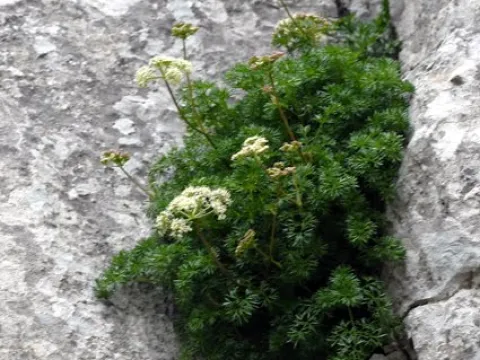
Dethawia tenuifolia
Dethawia tenuifolia
Dethawia tenuifolia is a specialized member of the Apiaceae family, native to the rugged terrains of the Pyrenees. Due to its mountain origins, successful cultivation requires simulating a natural chilling period, which implies that seeds often necessitate stratification to break dormancy before germination can occur.
What the section contains
Dethawia tenuifolia
The ideal sowing window in a cultivated environment is early spring, once the danger of hard frost has passed and soil temperatures have reached approximately 8–10 degrees Celsius. Maintaining soil moisture is critical during the initial three to four weeks of the germination process.
Seeds should be sown at a shallow depth of 1 to 1.5 centimeters in well-draining, loose soil to prevent oxygen deprivation. Rows should be spaced about 30 centimeters apart to allow for proper airflow, which is vital for preventing fungal diseases in the early stages of development.
Because the seeds are relatively small, it is highly recommended to use a lightweight covering of vermiculite or fine compost. This helps keep the seeds in place while retaining the necessary humidity required for the delicate radicle to penetrate the soil surface successfully.
In regions with intense spring sun, young seedlings should be provided with partial shade. As the plants develop their secondary leaves, they can be gradually acclimated to brighter light conditions to promote healthy vegetative growth and robustness.
Dethawia tenuifolia thrives in climates characterized by cool temperatures and high atmospheric humidity. It is inherently sensitive to high heat and water stress, requiring locations that offer protection from the scorching midday sun while maintaining consistent environmental conditions.
The soil profile for this crop must be neutral to slightly alkaline, with high permeability to ensure that roots do not suffer from waterlogging. Incorporating inorganic materials like grit or coarse sand into the growing medium helps mimic the rocky, alpine substrates of its native range.
Nutritional needs are moderate; a balanced slow-release fertilizer applied at the start of the growth season supports the plant's structural development. Excessive nitrogen fertilization should be avoided as it leads to succulent, weak stems that are susceptible to damage and pests.
Irrigation practices must be calibrated to keep the root zone consistently moist but never saturated. Drip irrigation systems are preferred as they minimize water contact with the foliage, thereby reducing the risk of pathogen infection at the base of the plant.
Mulching the surrounding area with small stones or pebbles helps regulate soil temperature and keeps the crown of the plant dry, which is a critical factor in ensuring the long-term vigor of this species in a garden or commercial setting.
Fungal pathogens represent the most significant threat to Dethawia tenuifolia, particularly in conditions of poor ventilation and high humidity. Powdery mildew can quickly establish itself on leaf surfaces, necessitating prompt intervention to prevent stunted growth and yield loss.
Common agricultural pests such as aphids and spider mites are frequent visitors to these plants. They primarily target the tender new growth, causing curling and yellowing of the leaves, which can severely weaken the plant if left untreated for an extended period.
Soil-borne diseases, particularly Fusarium root rot, are lethal to this species if the soil structure becomes compacted or poorly drained. Crop rotation and the sterilization of growing implements are essential prophylactic measures in any management program.
Wireworms and other soil-dwelling larvae can damage the subterranean parts of the plant, potentially leading to its collapse during hot weather. Integrated pest management (IPM) strategies, including the use of biological controls, are recommended over broad-spectrum synthetic pesticides.
Weed competition is another limiting factor that must be managed to ensure the crop has access to sufficient light and nutrients. Manual weeding is often preferred around the base of the plants to avoid damaging the shallow, fragile root system common to this taxon.