
Desfontainia
Desfontainia
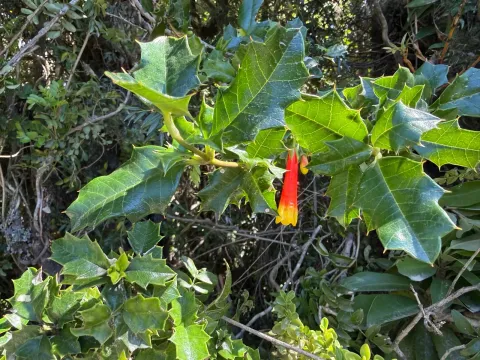
Desfontainia (Latin: Desfontainia) is a genus of evergreen shrubs belonging to the Columelliaceae family, recognized for its striking, tubular, waxy flowers in shades of red and yellow.
What the section contains
Desfontainia
Native to the cool, moist forests and mountainous regions of Central and South America, this plant is naturally adapted to high-altitude habitats from Costa Rica to Southern Chile.
Its botanical structure is notable for its rigid, glossy, holly-like leaves which provide year-round foliage interest even when the plant is not in its main blooming cycle.
Cultivation requires specific environmental conditions, primarily high atmospheric humidity and a cool climate, making it challenging to grow in hot or arid regions.
Soil preferences include acidic, well-draining, and humus-rich compositions, which must be consistently moist to mimic the forest floor conditions of its native Andean environment.
The primary concern for Desfontainia health is root rot, frequently caused by waterlogged soil or poor drainage, which rapidly compromises the shrub's root system.
In greenhouse settings, environmental stress often leads to pest issues, with spider mites and scale insects being the most common culprits in less-than-ideal humidity levels.
Exposure to direct, harsh sunlight can damage the leaves, causing browning or scorch marks that permanently diminish the aesthetic appeal of the shrub.
Sensitivity to mineral content in water, particularly calcium, means that using hard tap water can lead to nutrient lockout and leaf yellowing over extended periods.
Poor ventilation during winter dormancy can promote fungal infections, necessitating a careful balance of humidity and airflow to ensure the plant remains disease-free.