
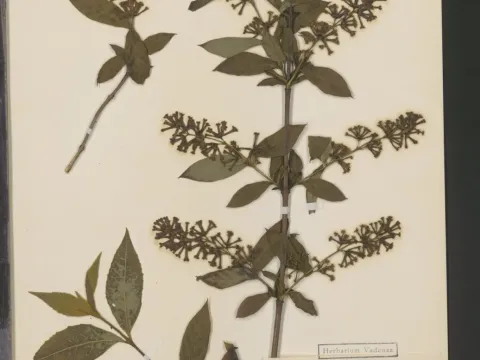
Delavay's Buddleja
Buddleja delavayi
Delavay's Buddleja (Buddleja delavayi) is a spectacular deciduous shrub from the Scrophulariaceae family, native to the mountainous regions of Southwest China. In its natural habitat, the plant occupies sunny slopes, which determines its light-loving nature when cultivated in gardens.
What the section contains
Delavay's Buddleja
For successful development, the crop requires well-drained, fertile loamy soils with a neutral or slightly alkaline pH level. Excessive moisture and stagnant water around the root system are destructive to this species, which is why a robust drainage layer is mandatory on heavy clay soils.
The climatic preferences of the Buddleja are limited to regions with mild winters, as the plant is characterized by moderate frost resistance. In cooler climates, the culture requires careful winter protection or growing as a container plant that is moved into a heated room upon the arrival of the first frosts.
An important component of agrotechnics is regular sanitary and formative pruning. Removing faded inflorescences stimulates repeated flowering, while radical spring pruning contributes to the rejuvenation of the shrub and the formation of a lush crown with an abundance of new floral shoots.
The economic use of Delavay's Buddleja is concentrated in landscape design and ornamental gardening. Thanks to its aromatic, spike-shaped inflorescences, the plant is a valuable honey plant that attracts numerous pollinators, including butterflies, making it an indispensable element of ecological gardens.
The main phytosanitary risks for Buddleja are associated with infestations of sap-sucking pests, among which the spider mite and whitefly are the most dangerous, especially in conditions of low air humidity.
If the irrigation regime is violated or air circulation is poor, the shrub may suffer from fungal infections such as gray mold and leaf spots, which require the application of fungicides at the early stages of symptom manifestation.