
Desfontainia spinosa
Desfontainia spinosa
Desfontainia spinosa is a remarkable evergreen shrub belonging to the Columelliaceae family. Originating from the cool, humid forests of the Andes, it is found naturally from Costa Rica down to the southern reaches of Chile and Argentina.
What the section contains
Desfontainia spinosa
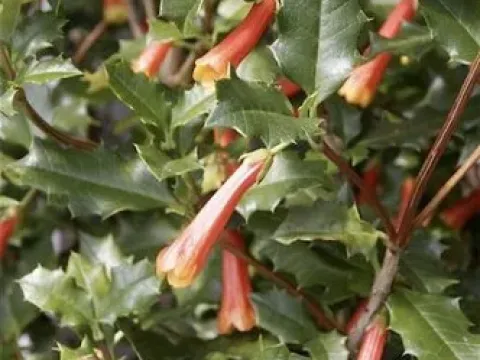
The plant is widely recognized for its rigid, glossy, holly-like leaves with sharp, spiny margins. Despite the physical resemblance to Ilex species, it remains a distinct botanical subject that thrives in specialized environments.
Cultivation requires conditions that mimic its native high-altitude habitat: consistent moisture, cool temperatures, and partial shade. It is highly sensitive to heat and dry conditions, making it an excellent choice for mild, maritime climates.
The ideal soil for this species is acidic, well-draining, and rich in organic matter. Gardeners should ensure that the planting site has sufficient aeration, as stagnant water is detrimental to the plant's health and can lead to immediate root distress.
Beyond its foliage, the shrub is prized for its stunning, tubular, scarlet-red flowers tipped with yellow. These blooms appear throughout the summer and autumn, providing a vibrant contrast to the deep green, leathery leaves.
The primary threats to Desfontainia spinosa involve root pathogens, which are typically triggered by improper drainage or excessive irrigation during the dormant season.
Common pests such as spider mites and scale insects may infest the foliage if the plant is maintained in areas with poor ventilation or low relative humidity.
The shrub is particularly vulnerable to chlorosis caused by high soil pH levels. Ensuring that the soil remains acidic is essential for the plant to absorb iron and other vital trace elements effectively.
Winter cold poses a risk to juvenile plants; therefore, mulching or container cultivation is advised in regions where temperatures drop significantly below freezing.
Regular inspection of the undersides of the leaves is recommended to detect any signs of infestation early, allowing for timely intervention with horticultural oils or approved systemic treatments.