
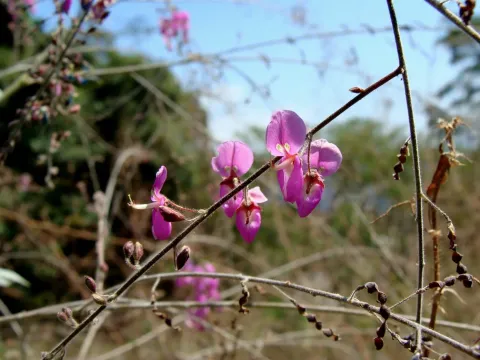
Desmodium asperum
Desmodium asperum
Desmodium asperum, belonging to the Fabaceae family, is a versatile perennial legume utilized extensively in agricultural systems as both a high-quality forage crop and a soil-improving agent.
What the section contains
Desmodium asperum
The optimal time for sowing is at the beginning of the rainy season, ensuring adequate soil moisture levels for germination. Soil temperatures between +20°C and +25°C are ideal to promote vigorous early seedling development.
A seeding rate of 4–6 kg per hectare is generally recommended for pasture establishment. Seeds should be sown at a shallow depth of approximately 1.5–2 cm to ensure proper soil-to-seed contact without burying them too deeply.
Inoculation of seeds with appropriate Rhizobium strains is crucial for successful establishment. This symbiotic association enables the plant to fix atmospheric nitrogen, significantly reducing the reliance on nitrogenous mineral fertilizers.
Because the early growth stage of Desmodium asperum is relatively slow, it is essential to manage weed competition during the first weeks. Clean seedbeds and well-timed interventions are vital to ensure the crop establishes dominance.
Originating from tropical and subtropical regions, this species thrives in climates with high annual rainfall, ideally between 1000–1500 mm, distributed throughout the growing season.
The plant performs best in well-drained soils, ranging from sandy loams to clay loams. While it shows some tolerance to temporary moisture excess, prolonged waterlogging must be avoided to prevent root rot.
An acidic to neutral soil pH, ideally between 5.5 and 6.5, is optimal for nutrient uptake and bacterial nodule formation. Liming may be necessary on highly acidic soils to improve productivity.
As a light-demanding crop, it should be grown in open, sunny areas. Shade negatively affects the plant's photosynthetic activity, leading to lower biomass production and a decrease in nutritional value.
While exhibiting moderate drought tolerance due to a deep taproot system, the crop requires adequate moisture to maintain high levels of forage production during dry spells, especially in commercial livestock operations.
Under optimal management, Desmodium asperum can yield between 15 and 20 tons of green biomass per hectare per season, making it a reliable source of high-quality feed for cattle and other herbivores.
The nutritional profile is characterized by high crude protein content, often ranging from 12% to 18% in the dry matter. The dry matter content typically accounts for 20% to 25% of the total harvested green weight.
Integrating this legume into mixed pastures with grasses is a proven strategy to maximize yield and nutritional balance. This practice enhances the protein density of the forage while maintaining the necessary fiber content.
A well-managed stand can remain productive for 4 to 6 years. With proper rotational grazing or harvesting intervals, the longevity and annual output of the field can be significantly extended.
Beyond its feed value, the crop acts as a powerful soil enhancer. The biomass turnover and nitrogen fixation increase soil organic matter and fertility, benefiting subsequent crops in a rotation cycle.
The primary threats to Desmodium asperum include fungal diseases such as anthracnose and powdery mildew, which tend to proliferate in conditions with high humidity and poor air circulation within the stand.
Insect pests, including various leaf-eating beetles and weevils, can significantly damage the foliage. Regular field monitoring is necessary to determine if economic thresholds are reached for intervention.
Nematode infestations can severely compromise the root system, leading to overall plant vigor loss and increased susceptibility to opportunistic soil-borne pathogens, which may necessitate specific crop rotations.
Integrated pest management strategies are advised, focusing on the use of resistant varieties, maintaining optimal plant density, and ensuring a balanced nutrient program to enhance natural plant resilience.
Due to its use as animal feed, chemical control must be applied with extreme caution. Products used must have low residual effects to ensure the safety and health of livestock consuming the forage.
For high-quality forage, the crop should be harvested at the budding or early flowering stage, when the nutrient content is at its peak and the stems are still tender enough for optimal digestibility.
A cutting height of at least 10–12 cm is recommended to encourage rapid regrowth from the crown. Excessive harvesting intensity can deplete root reserves and lead to a decline in stand persistence.
When producing hay, careful drying in small windrows is necessary to minimize leaf loss, as leaves contain the highest concentration of proteins and essential minerals compared to the stems.
Seed harvesting requires timing the maturity of the pods. Because pods are prone to shattering as they dry, harvesting must be executed promptly once the seeds have reached physiological maturity.
After harvest, the seed must be cleaned and dried to a moisture content of 12% or less. Proper storage in a cool, dry place is essential to maintain high germination viability for the next planting season.