
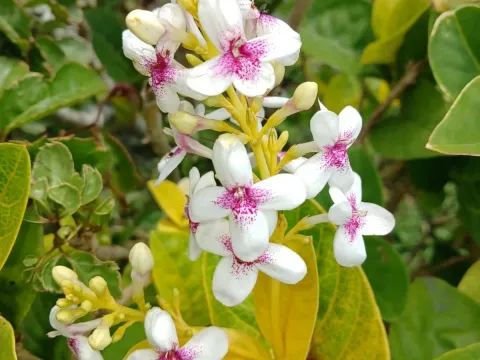
Pseuderanthemum reticulatum
Pseuderanthemum reticulatum
Pseuderanthemum reticulatum is an evergreen ornamental shrub belonging to the Acanthaceae family. Originating from the tropical regions of the South Pacific, including Fiji and Vanuatu, this plant thrives in warm and humid environments, making it a popular choice for warm-climate landscaping.
What the section contains
Pseuderanthemum reticulatum
Botanically, the plant is recognized for its erect stems and striking foliage, which features a distinct network of golden-yellow veins on a dark green leaf surface. This unique patterning gives the plant its common name and makes it a sought-after specimen for decorative purposes.
The cultural requirements demand consistent tropical temperatures, ideally between 20°C and 28°C. It is intolerant of frost and cold drafts, which necessitates indoor protection or greenhouse cultivation in regions with cooler seasonal changes.
The plant performs best in a fertile, well-draining soil mix that remains moist but not waterlogged. Incorporating organic matter such as peat or compost, combined with perlite, helps maintain the necessary soil structure and aeration required for healthy root systems.
Adequate lighting is essential to preserve the vibrant contrast of the leaf variegation. While it enjoys bright conditions, direct, intense sunlight can scorch the leaves; therefore, filtered or indirect light is recommended for optimal foliage health and color intensity.
Common pests affecting Pseuderanthemum reticulatum include spider mites and mealybugs, which are particularly problematic in dry indoor conditions. These pests can rapidly infest the plant, causing foliage discoloration and loss of vigor.
Root rot, often caused by overwatering or poor drainage, is a significant threat to the plant's survival. Excess water prevents root respiration and creates an environment conducive to fungal pathogens that destroy the root system.
To mitigate these threats, maintain stable humidity levels through regular misting or using a humidifier, while ensuring the potting medium is never left sitting in stagnant water. Inspect the undersides of leaves frequently for early signs of pest activity.
Integrated pest management, including the use of neem oil or insecticidal soaps, is effective if outbreaks occur. Prevention through proper sanitation, such as removing debris and dead leaves from the soil surface, is also highly advised.
Regular monitoring and adjustment of environmental conditions ensure the plant maintains its resistance to stress. By balancing watering and light exposure, growers can prevent most physiological issues associated with the cultivation of this tropical shrub.