
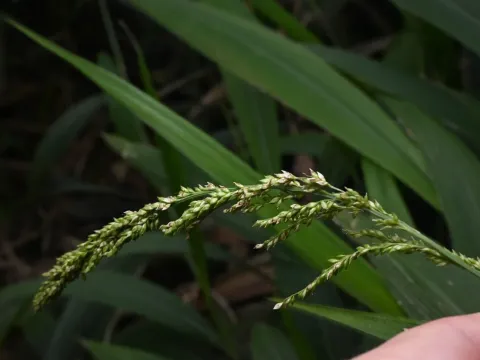
Setaria paniculifera
Setaria paniculifera
Setaria paniculifera is a heat-loving cereal crop belonging to the Poaceae family. Sowing should only be initiated once the soil temperature at the seeding depth has consistently reached 12–15 degrees Celsius to ensure uniform germination.
What the section contains
Setaria paniculifera
The optimal planting window is late spring or early summer, effectively avoiding any risk of late spring frosts. Utilizing high-quality seeds from early generations is crucial for achieving consistent crop development and ensuring timely maturity before autumn.
Seeds are typically sown at a depth of 2–3 centimeters, which is ideal for small-seeded grasses. Higher seed density during the initial establishment phase is recommended to help the crop outcompete early-season weeds until the canopy closes.
A well-prepared, fine-textured seedbed with sufficient moisture is essential for success. In arid regions, post-sowing rolling is highly recommended to improve soil-to-seed contact and maintain capillary water movement for the germinating seeds.
When sown at the correct time, Setaria paniculifera exhibits strong early growth vigor, allowing it to quickly develop significant biomass. Early sowing into cold soil can result in patchy stands and slow development, reducing the overall competitive ability of the crop.
The crop has high temperature requirements, demanding a long period of active summer heat to reach full physiological maturity. It is highly photophilous and should not be shaded by other crops or dense weed infestations to maintain maximum productivity.
While the plant is relatively adaptable to various soil types, it performs best in fertile chernozem or chestnut soils with a neutral pH. It should be avoided on waterlogged or heavy clay soils where poor drainage can cause root development issues.
Setaria paniculifera possesses moderate drought tolerance, enabling it to thrive in continental climates provided there is adequate moisture during the tillering and stem elongation phases. Significant fluctuations in soil moisture can trigger premature bolting.
Agronomic management requires the application of nitrogen and phosphorus fertilizers to stimulate vegetative growth. Organic manure applied as a pre-planting amendment can also significantly boost biomass yields and improve long-term soil fertility.
Proper field maintenance includes early spring harrowing for moisture conservation and timely inter-row cultivation to manage weed populations and ensure proper soil aeration. Strong aeration supports a robust secondary root system, increasing the crop's stability.
Setaria paniculifera is primarily cultivated for livestock forage, serving as a reliable source of green fodder, hay, and silage. The crop is known for its ability to accumulate large volumes of vegetative mass within a single growing season.
Yield potential depends heavily on soil fertility, moisture availability, and the frequency of harvests. In intensive farming systems, this grass can be integrated into a pasture or haying sequence to maintain a steady feed supply for livestock.
Maximum forage nutritional value is achieved during the stem elongation phase, before the plant reaches full flowering. Delaying the harvest results in an increase in lignin and fiber content, which significantly reduces digestibility for animals.
Under optimal moisture conditions, the crop can regrow after cutting, allowing for multiple harvests during a single season. This makes it a highly valuable asset for farmers looking to maximize land use efficiency in forage production systems.
Setaria paniculifera is considered a valuable plant for adaptive agriculture, providing acceptable yields on land where more demanding forage crops might struggle to survive. Its versatility makes it a key component of resilient forage programs.
Like many Poaceae members, Setaria paniculifera is susceptible to various fungal diseases, including smut and rusts. High humidity levels during the flowering stage often exacerbate the spread of these pathogens, potentially impacting quality and yield.
Pests such as cereal flies, aphids, and wireworms are the most significant threats to young plants, often damaging the root system. Regular field monitoring is necessary to detect and manage pest outbreaks before they reach economic threshold levels.
Disease prevention is primarily achieved through a balanced crop rotation that avoids planting cereal grasses in the same field consecutively. Fungicide-treated seeds are recommended to protect the crop against early-season infections.
Pest management involves the destruction of host weeds around field borders and the judicious use of insecticides when necessary. Integrated Pest Management (IPM) strategies, which include biological control agents, can also be highly effective.
Maintaining high agronomic standards is the best defense against environmental stress and pests. A healthy, vigorously growing crop is naturally more resistant to pathogens and recovers faster from any potential environmental shocks.
Harvesting for green fodder or hay should occur between the stem elongation phase and the onset of flowering. This window ensures the best balance of nutrients, including proteins, carbohydrates, and fiber, for high-quality livestock feed.
When producing hay, it is essential to ensure rapid drying in windrows to prevent mold growth. Using mechanical tedders to turn the forage ensures even moisture loss and helps preserve the plant’s natural carotene content.
Seed harvesting should be performed at full maturity when the panicles are fully colored and moisture content drops to 14–16 percent. Direct combining requires precise adjustments to the cylinder speed to minimize seed damage and harvest losses.
Post-harvest processing involves cleaning seeds of impurities and drying them in well-ventilated storage areas. Proper storage conditions ensure that the seeds maintain high germination energy and viability for future planting seasons.
Plant residues left in the field after harvest can be incorporated into the soil as green manure. This practice adds essential organic matter, improves soil structure, and promotes beneficial microbial activity for the next crop in the rotation.