
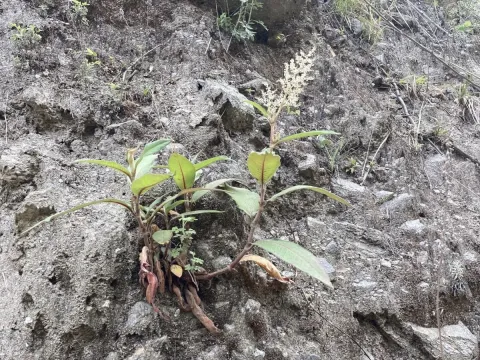
Persicaria mollis
Persicaria mollis
Persicaria mollis, commonly known as soft knotweed, is a robust herbaceous perennial belonging to the Polygonaceae family. It is typically propagated vegetatively by division of the root clumps during spring or autumn.
What the section contains
Persicaria mollis
Propagation by seeds is possible but requires a period of cold stratification to break dormancy. Sowing can be done in autumn or early spring to ensure the seeds experience the necessary temperature cycles.
When dividing, ensure each piece has healthy buds and sufficient root structure. Plants should be spaced approximately 50–70 cm apart to accommodate their vigorous growth habit.
The plant establishes quickly and spreads to form dense mounds, making it an excellent groundcover choice. In commercial production, softwood cuttings taken in summer under greenhouse conditions are also effective.
The best window for successful establishment is during active growth, allowing the plant to develop a strong root system before the onset of winter dormancy.
Originating from the mountainous regions of the Himalayas, Persicaria mollis prefers cool, moist climates. It thrives in partial shade and requires consistent soil moisture when grown in sunnier locations.
The ideal soil for this species is fertile, humus-rich, and well-drained. While it loves moisture, waterlogging during winter can lead to root rot, so proper site preparation is crucial.
It prefers neutral to slightly acidic soil pH. Incorporating organic matter such as compost or well-rotted manure in early spring promotes lush foliage development and vigorous flowering.
Hardy in USDA zones 5–8, the plant is quite resilient, though in regions with extreme cold and little snow cover, applying a layer of mulch helps protect the roots.
In hot and dry climates, the plant may wilt; therefore, consistent supplemental irrigation is necessary to maintain its high ornamental value throughout the growing season.
In ornamental landscaping, Persicaria mollis is valued for its high biomass production and ability to suppress weeds by creating a dense, shade-casting canopy.
The plant produces masses of cream-white, plume-like flower spikes from mid-summer through autumn, which significantly enhances the visual appeal of any landscape design.
Maintenance involves cutting back spent flowers and old growth at the end of the season to encourage fresh, healthy development in the following spring.
Regular applications of balanced fertilizers help maintain the plant's structural integrity and the intensity of its foliage color throughout the summer months.
Due to its soil-binding properties, it is frequently used on slopes and in erosion-prone areas to stabilize the ground, demonstrating significant utility beyond mere aesthetics.
Persicaria mollis is remarkably resistant to most common plant diseases, making it a low-maintenance choice for sustainable and eco-friendly landscaping projects.
Root rot caused by stagnant water is the primary risk; this is easily mitigated by improving soil drainage and ensuring that the planting site is not prone to flooding.
Occasionally, aphids or spider mites may appear during periods of high heat and low humidity, but these pests rarely cause significant damage and can be controlled with simple treatments.
Young foliage can be susceptible to damage from slugs and snails in the spring. Barrier methods or organic molluscicides can be utilized if local populations become problematic.
General hygiene, including the removal of dead plant material at the end of the season, is the most effective preventative measure against potential fungal issues or overwintering pests.