
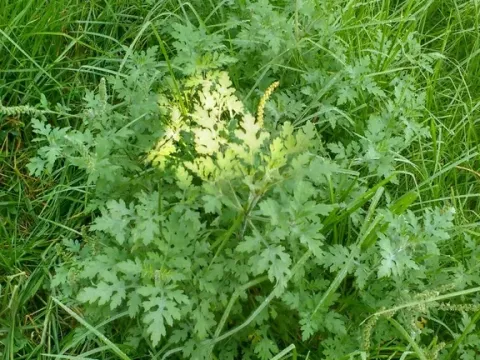
Peruvian ragweed
Ambrosia peruviana
Peruvian ragweed (Ambrosia peruviana) belongs to the Asteraceae family and is recognized for its specific biological characteristics. Sowing typically begins in early spring when the soil temperature consistently reaches 12–15 degrees Celsius.
What the section contains
Peruvian ragweed
The plant thrives in well-lit areas, requiring full sun exposure to achieve optimal growth rates. For agricultural production, planting is organized in rows with a distance of 50–60 cm to ensure sufficient space for each plant.
Seeds are sown at a shallow depth of approximately 1–2 cm. Proper soil contact is essential for uniform germination, which usually occurs within two weeks under favorable moisture conditions.
Early maintenance is vital, as seedlings are sensitive to competition from weeds. Regular weeding during the first month after emergence significantly increases the overall vigor of the crop.
Strategic timing of sowing according to regional climatic patterns ensures that the plant develops a robust root system before the onset of extreme summer heat.
This crop prefers well-drained loamy or sandy soils with a neutral pH level. It is highly adaptable but performs best when soil is rich in organic matter and well-aerated.
Although Peruvian ragweed is drought-tolerant, it responds positively to regular irrigation during its vegetative growth phase. Consistent moisture levels are key to maximizing biomass production.
The ideal ambient temperature for development ranges from 18 to 25 degrees Celsius. The crop is sensitive to frost, which can severely damage younger leaves and stems in the early season.
Nutrient management involves a balanced supply of nitrogen, phosphorus, and potassium. Applying nitrogen early in the season boosts leafy growth, while potassium helps in structural development.
Mechanical aeration through row cultivation is highly recommended to improve soil structure and prevent waterlogging, which can be detrimental to the plant's health.
Yield efficiency is largely determined by soil fertility and the frequency of harvesting. Under ideal conditions, the crop produces a substantial amount of green mass suitable for pharmaceutical applications.
Proper plant density is a critical factor in maximizing yield per hectare. Overcrowding can lead to stunted growth and reduced quality, while excessive spacing may allow weed infestation.
Depending on the region, multiple harvests per season may be possible. The initial harvest usually occurs at the onset of the budding stage to capture the plant at its peak concentration of active compounds.
Sustainable farming practices, such as crop rotation and the use of organic fertilizers, can ensure long-term productivity without depleting the soil’s natural reserves.
The quality of the final product depends on the precision of the harvest timing and the speed at which the biomass is processed post-harvest.
Powdery mildew represents a primary threat under conditions of high humidity and poor ventilation. Keeping the planting area well-ventilated is the most effective preventative measure.
Insect pests, such as aphids, can occasionally infest the leaves. Integrated pest management, including the use of biological control agents, is preferred to maintain the plant's medicinal quality.
Root rot occurs if there is poor drainage or persistent overwatering. Ensuring the planting site is slightly elevated or has adequate slope can eliminate this risk almost entirely.
Monitoring the field for signs of chlorosis or leaf spots is essential, as early detection allows for swift intervention and prevents the spread of potential pathogens to adjacent plants.
- Crop rotation cycles.
- Controlled irrigation practices.
- Removing diseased debris promptly.
Harvesting should be completed before the plants enter the full flowering phase to prevent seed dispersal and maintain the desired chemical profile of the biomass.
Mechanical harvesters should be adjusted to cut the stems at an appropriate height, ensuring that only the usable parts are collected while leaving the stubble for potential regeneration.
Once harvested, the material must be transported to a drying facility immediately to prevent overheating and fermentation, which can degrade the biological active compounds.
Drying is performed in shaded, well-ventilated areas at temperatures not exceeding 40 degrees Celsius. This carefully controlled process preserves the plant's natural color and therapeutic integrity.
Properly dried and packaged material should be stored in a cool, dry place away from sunlight to ensure longevity and quality compliance before reaching the end-user.