
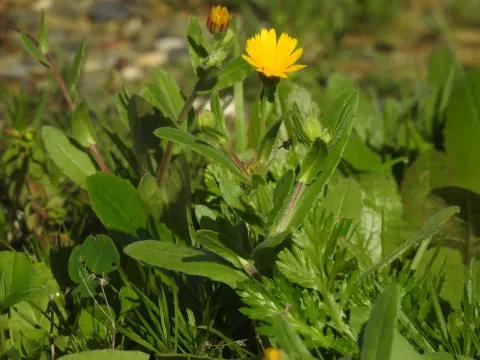
Persian Marigold
Calendula persica
Persian Marigold (Calendula persica) is a member of the Asteraceae family. This herbaceous annual is native to arid and semi-arid environments, showing high adaptability to harsh climates.
What the section contains
Persian Marigold
Sowing in temperate regions should be done in spring once the soil temperature consistently reaches 8–10°C. In milder climates, late autumn sowing is possible to encourage early germination.
Seeds are typically sown in rows with a spacing of 30–45 cm between them, allowing sufficient space for root development and routine maintenance operations.
The optimal planting depth is 2–3 cm, ensuring seeds are protected from drying out while remaining close enough to the surface for uniform emergence.
Proper plant density is critical; while sufficient seeding is required for good yields, overcrowding should be avoided to prevent poor air circulation among the foliage.
This crop thrives in full sunlight and requires open areas without any overhead shade, which is essential for maximizing the active ingredient content in the blossoms.
It prefers light, well-draining soils, such as sandy loams, and is tolerant to slightly alkaline soil conditions common in its native range.
Although drought-tolerant, Calendula persica responds well to irrigation during the budding and flowering phases, significantly increasing the size and quantity of blooms.
Good soil drainage is non-negotiable, as waterlogged conditions quickly lead to root rot and other fungal diseases, especially in cooler spring months.
Routine weeding and soil aeration between rows are necessary to prevent nutrient competition and ensure that moisture penetrates effectively to the root zone.
The primary economic focus is the harvest of flower heads, which are highly valued in the pharmaceutical and cosmetic industries for their potent medicinal properties.
Yield is highly dependent on proper site selection and management. When grown under optimal conditions, this species provides a steady supply of raw material.
Beyond its pharmacological use, the plant serves as a beneficial melliferous species, helping to sustain local pollinator populations in agricultural landscapes.
Continuous harvesting of open flowers stimulates the plant to produce new buds, extending the harvest season and maximizing the overall biomass yield.
The economic success of the crop relies on the quality of the harvested blooms, which should be free of moisture and extraneous organic matter.
Common pests include aphids and spider mites, which can proliferate rapidly in hot and dry weather conditions, potentially damaging the tender flower buds.
Powdery mildew represents the most significant disease threat, particularly when humidity is high and air movement around the plants is restricted.
Integrated pest management, including the use of targeted biological controls and preventative fungicides, is recommended to protect the crop without compromising medicinal quality.
Crop rotation is essential; planting Calendula in the same location year after year can lead to an accumulation of soil-borne pathogens and increased pest pressure.
Maintaining clean field borders is an effective strategy to reduce the migration of pests and pathogens from wild vegetation into the cultivated crop.
Harvesting is performed selectively as the flower heads reach the optimal stage, characterized by the horizontal orientation of the ray florets.
Operations must be carried out in dry weather. Moisture on the flowers during harvest significantly increases the risk of spoilage and mold development during storage.
Drying should begin immediately after harvest in a well-ventilated, shaded environment. Keeping temperatures below 45°C helps preserve essential oils and colors.
Once dried, the flowers should be sorted to remove any debris or stalks, ensuring that only high-quality petals and discs are included in the final batch.
Final storage requires cool, dark, and dry conditions in airtight containers to maintain the potency and chemical stability of the harvested plant material.