
Persicaria hastatoauriculata
Persicaria hastatoauriculata
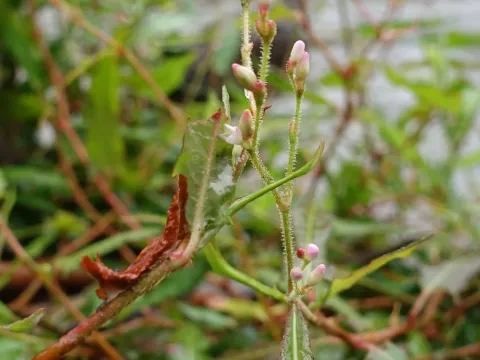
Persicaria hastatoauriculata is a member of the Polygonaceae family. It is a perennial herbaceous plant native to the moist, temperate regions of East Asia, typically thriving in forest edges and riparian zones.
What the section contains
Persicaria hastatoauriculata
The plant features distinctively shaped leaves with auriculate bases and dense terminal inflorescences. Its robust root system allows it to stabilize soil, making it useful in specific ecological management scenarios.
To achieve optimal growth, this crop requires nutrient-rich, moist loamy soils. While it adapts to various conditions, it performs best in soils with a slightly acidic to neutral pH balance and consistent moisture levels.
Climate-wise, it prefers partial shade, as intense direct sunlight during the peak of summer can cause leaf scorch and dehydration. Proper air circulation is necessary to prevent excessive humidity around the foliage.
Agricultural management should prioritize organic amendments to improve soil structure and regular hydration to mimic the plant's native humid environment, ensuring vigorous vegetative growth throughout the season.
The primary pathological threats include fungal infections such as powdery mildew, which are exacerbated by high canopy density and stagnant air conditions in the growing area.
Insect pests such as aphids and spider mites represent significant risks. They feed on the underside of the leaves, resulting in stunted growth and a general decline in the plant's health and vigor.
Effective pest control strategies involve integrated management practices, including the release of natural predators and the application of targeted, environmentally friendly pesticides when necessary.
Disease prevention is largely achieved through strict sanitation: clearing away dead foliage and ensuring that plants are spaced adequately to allow for necessary evaporation and airflow.
Regular inspection of the crop's underside foliage is a key management task, as early detection of pests allows for localized treatments that prevent widespread outbreaks throughout the field.