
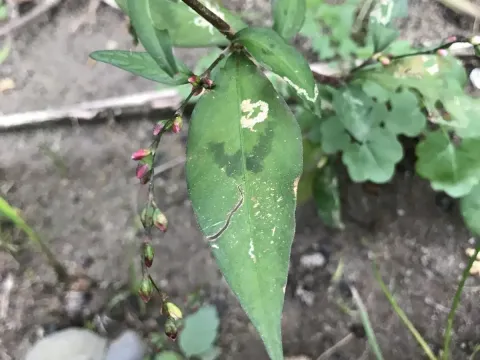
Persicaria flaccida
Persicaria flaccida
Persicaria flaccida is a perennial herbaceous plant belonging to the Polygonaceae family. It is naturally adapted to moist and riparian habitats, frequently inhabiting the edges of streams, rivers, and marshy areas where water availability is constant.
What the section contains
Persicaria flaccida
The native distribution of this species is primarily centered in Asia, where it thrives under various temperate and subtropical conditions. Its ability to tolerate saturated soils makes it a significant species in wetland ecosystems and riparian zones.
Optimal growth conditions require consistent moisture and high levels of sunlight. The species performs best in nutrient-rich alluvial soils, showing a remarkable capacity to adapt to changing water levels throughout the growing season.
Botanically, it features lanceolate leaves and spikes of small flowers, typically pink or white, which bloom in dense clusters. The stems are often procumbent, capable of rooting at the nodes, which serves as an effective mechanism for vegetative spread and population expansion.
From a technical standpoint, Persicaria flaccida is evaluated for its role in phytoremediation and soil stabilization. Its extensive root architecture helps prevent erosion in sensitive aquatic environments and promotes the filtration of nutrient-heavy runoffs.
The plant is susceptible to various fungal pathogens that flourish in high-humidity environments. Powdery mildew remains the most common threat to foliar health, particularly when air circulation is compromised in dense plantings.
In terms of insect pests, aphids are frequently observed colonizing the terminal shoots during the active growth phase. While generally hardy, the plant may occasionally suffer from leaf-mining insects that impact the overall photosynthetic efficiency of the population.