
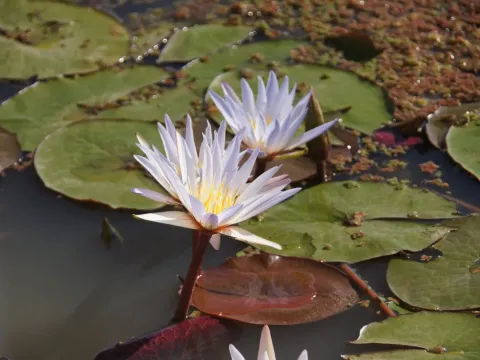
Guinea water lily
Nymphaea guineensis
The Guinea water lily (Nymphaea guineensis) is an exotic member of the Nymphaeaceae family. Originating from the tropical wetlands of West Africa, this perennial aquatic plant is highly prized for its elegant flowers and decorative foliage, commonly grown in controlled aquatic environments.
What the section contains
Guinea water lily
This species demands high thermal conditions to thrive. It requires water temperatures consistently between 22 and 28 degrees Celsius. Because it is highly sensitive to cold, cultivation in temperate regions requires indoor winter storage or heated greenhouse ponds.
Soil requirements are specific: the plant thrives in a rich, clay-heavy substrate supplemented with organic matter. Proper nutrient availability in the root zone is crucial for sustaining the long blooming period characteristic of this tropical species.
Light intensity is the primary driver of the plant's metabolic activity. The Guinea water lily requires at least 6–8 hours of direct, unfiltered sunlight daily. Insufficient light results in chlorosis and a complete cessation of flower bud formation.
Water quality and depth management are essential agricultural practices. The containers should be placed at a depth of 30 to 60 cm. Maintaining stable water parameters and preventing excessive turbidity ensures that the plant can perform photosynthesis effectively.
Pest pressure represents a significant challenge in the cultivation of Nymphaea guineensis. Water lily beetles are the most notorious pests, as they feed on the leaves and can strip a plant to its veins within a few days if left unchecked.
Fungal pathogens such as leaf spot are common threats in stagnant or overcrowded pond conditions. These infections flourish when water circulation is poor, causing brown or black lesions that weaken the overall structure of the plant.
Control of these threats involves diligent monitoring and manual removal of infested leaves. For large-scale aquatic operations, introducing natural predators or using biological soaps is a safer alternative than synthetic pesticides that might harm the ecosystem.
Preventive maintenance includes the regular removal of decaying leaf litter and excessive organic debris from the bottom of the container. Reducing the nutrient load helps prevent algae blooms that compete with the water lily for resources.
Another major factor in plant health is the management of water chemistry, specifically pH levels. Fluctuations in acidity can lead to nutrient lockout, making it difficult for the plant to absorb essential minerals, which further exposes it to stress and disease.