
Halleria
Halleria
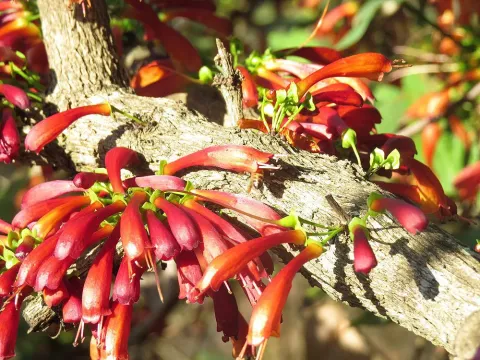
Halleria is a genus of evergreen shrubs or small trees belonging to the family Scrophulariaceae. Native to Southern Africa, these plants are renowned for their distinct appearance and their ability to thrive in warm, frost-free environments where they often reach heights of several meters.
What the section contains

Halleria
The climate requirements for Halleria include a temperate to subtropical environment. While they are resilient, they are not frost-tolerant, and extreme cold can cause significant tissue damage. Protection from winter winds is recommended in regions with unpredictable weather.
Optimal soil conditions should be characterized by high fertility and excellent drainage. The plant prefers slightly acidic to neutral loamy soils. Adding organic compost during the planting phase helps maintain moisture levels while ensuring that roots do not remain waterlogged.
Cultivation practices involve consistent watering during the growing season, particularly if the plant is established in a container. Fertilization with a balanced slow-release fertilizer in early spring supports the vigorous development of its dense, glossy foliage.
Regarding sunlight, Halleria performs best in full sun but appreciates some light shade during the peak of summer in hotter climates. Its unique habit of blooming on the stem (cauliflory) makes it a visually striking specimen for gardens and managed landscapes.
Pest management is a critical aspect of Halleria care, with aphids being the most frequent invaders. These insects congregate on tender new growth, secreting honeydew which can lead to secondary fungal growth such as sooty mold.
Scale insects also pose a significant threat by attaching themselves to the stems and branches. These pests are often difficult to detect until the plant starts showing signs of stunted growth or yellowing of the leaves.
Fungal diseases, specifically leaf spot and root rot, are commonly caused by poor environmental conditions. Overwatering in poorly draining soil creates an anaerobic environment that invites pathogens like Phytophthora, which can be fatal to the root system.
Regular maintenance, including thinning the crown to improve airflow, is essential for disease prevention. If a heavy infestation occurs, horticultural oils or systemic insecticides should be applied to manage the population while preserving the plant's health.
A rigorous inspection schedule, focusing on the undersides of leaves and the junction of branches, is the most effective way to manage potential outbreaks. Healthy, well-nourished plants are significantly more resistant to both environmental stress and pest attacks.