
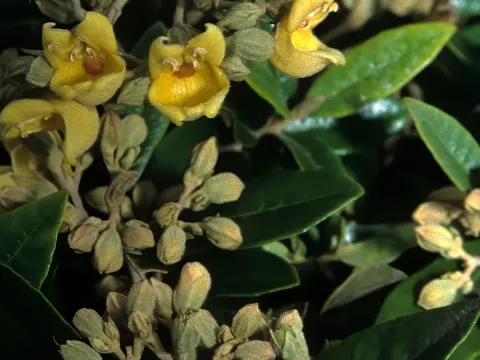
Anastrabe
Anastrabe
Anastrabe, specifically the species Anastrabe integerrima, is a unique plant belonging to the Stilbaceae family. Native to the riverine forests and mountain slopes of South Africa, it is valued for its distinct evergreen foliage and bright yellow flowers.
What the section contains

Anastrabe
The plant exhibits a shrub-like or small tree growth habit, reaching significant heights in optimal natural conditions. Its leaves are leathery and glossy, which provides a high aesthetic appeal for landscaping purposes throughout the year.
Cultivation of Anastrabe requires well-draining, nutrient-rich soil to mimic its natural riverbank habitat. It thrives best in partial shade, where the intensity of the sun is filtered, preventing potential leaf scorch during peak summer heat.
Regular irrigation is essential for this plant, especially during the establishment phase. However, care must be taken to avoid waterlogging, which the plant is highly sensitive to due to the risk of root rot development.
As a landscape plant, Anastrabe is often utilized in warmer climate zones to form privacy hedges or as a feature specimen. It responds well to pruning, allowing gardeners to maintain a dense, compact shape that is visually pleasing.
While Anastrabe is generally resilient, it can face challenges if environmental conditions are not ideal. Overwatering is the primary cause of decline, leading to root pathogens that compromise the health of the entire plant.
In greenhouses or indoor settings, spider mites and scale insects are common pests. These pests thrive in dry air conditions and can cause significant foliage damage if left unmanaged for extended periods.
Fungal issues, such as leaf spot, may arise if the air circulation around the canopy is poor. Maintaining proper spacing and pruning for airflow is a critical preventative measure for healthy growth.
Nutrient deficiencies, particularly iron or magnesium, may manifest as leaf chlorosis. Growers should monitor leaf color and adjust fertilizer applications using balanced, chelated nutrient formulas when necessary.
Effective management of these threats involves routine inspections and hygiene practices. Removing fallen leaf litter and ensuring clean pruning tools significantly reduces the risk of introducing diseases to the garden.