
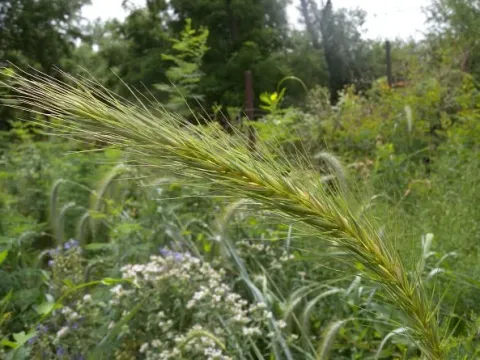
Streambank wheatgrass
Agropyron riparium
Streambank wheatgrass is typically sown in early spring or late autumn when soil moisture is at its peak. Sowing at these times ensures consistent germination, as the seeds rely on soil moisture to break dormancy.
What the section contains
Streambank wheatgrass
The seeds should be planted at a depth of 1 to 2 centimeters in well-prepared seedbeds. Soil contact is crucial, so using a cultipacker after seeding is highly recommended to firm the ground.
Seeding rates typically range from 10 to 14 kilograms per hectare, depending on the desired stand density and environmental conditions. It is essential to ensure that the field is relatively free of aggressive weeds during the establishment phase.
Due to its relatively slow establishment rate compared to other grasses, Streambank wheatgrass is often planted as a monoculture or in simple mixtures. This approach minimizes competition and allows the root system to develop adequately.
In regions with short growing seasons, early spring seeding is preferred to take advantage of snowmelt and avoid the intense heat of early summer, which can stress newly germinated seedlings.
Streambank wheatgrass, scientifically known as Agropyron riparium, is a perennial cool-season bunchgrass belonging to the Poaceae family. It is renowned for its extensive root system and drought tolerance.
This grass thrives in a variety of soil textures, ranging from sandy loams to heavier clays. It is particularly well-adapted to drier sites and has a moderate tolerance for slightly saline or alkaline soil conditions.
The plant requires full sun for optimal performance and does not tolerate shady environments. It is highly cold-hardy, capable of surviving harsh winters, and is frequently used for erosion control on slopes.
One of its defining characteristics is its ability to remain dormant during periods of extreme drought, resuming growth once moisture levels improve. This makes it a reliable choice for semi-arid rangelands.
Adequate soil aeration is essential for optimal root development. While it can survive on lower-fertility soils, nitrogen application can significantly enhance vegetative growth and overall yield in commercial operations.
Streambank wheatgrass provides consistent, though not always high-volume, forage yields. Under favorable management, it can produce 3 to 5 tons of hay per hectare per year.
The yield is most reliable in its second and third years of establishment. Because of its drought tolerance, it serves as a stable source of forage during years when other crops might fail due to moisture stress.
It is excellent for late-season grazing, as the foliage remains relatively palatable even after it has matured. It is also a popular choice for conservation reserve programs due to its long lifespan.
While not as productive as some irrigated grass species, its value lies in its persistence and ability to provide ground cover under low-input management scenarios.
The grass is highly resistant to frequent grazing, provided there is enough recovery time. Proper grazing rotation ensures that the plant maintains its vigor and reproductive capabilities over time.
Like many perennial grasses, Streambank wheatgrass is susceptible to rust and powdery mildew, especially in high-humidity or poorly ventilated areas. Keeping the stand healthy helps mitigate these issues.
Insects such as grasshoppers and wireworms can pose threats, particularly during the seedling stage. Monitoring the population density of these pests is essential to prevent significant damage to the stand.
Maintaining a healthy, vigorous stand is the best natural defense against invasive weeds and pathogens. Overgrazing weakens the plants, making them more susceptible to disease outbreaks.
Gophers and other burrowing rodents can damage the root systems, leading to patches of die-back in the field. Effective pest management strategies should focus on preventing these infestations early.
While generally robust, the plant can be affected by viral diseases transmitted by aphid populations. Maintaining distance from other cereal crops can help reduce the risk of cross-infection.
For hay production, the optimal harvest time is during the early flowering or boot stage. This timing captures the highest levels of protein and nutrients before the stems become too lignified.
Mechanical harvesting should be carried out during dry weather to ensure proper curing. Using a mower-conditioner helps split the stems, allowing for faster moisture release and better hay quality.
Seed harvesting requires careful timing, typically when the seed heads turn a golden-brown color but before they shatter. Direct harvesting with a combine is standard for commercial seed production.
Proper post-harvest seed conditioning, including cleaning and drying to below 14 percent moisture, is vital to ensure long-term viability and prevent mold in storage.
After the harvest, the residue left on the field provides important ground cover, protecting the topsoil from wind erosion and helping to improve soil structure over the winter months.